

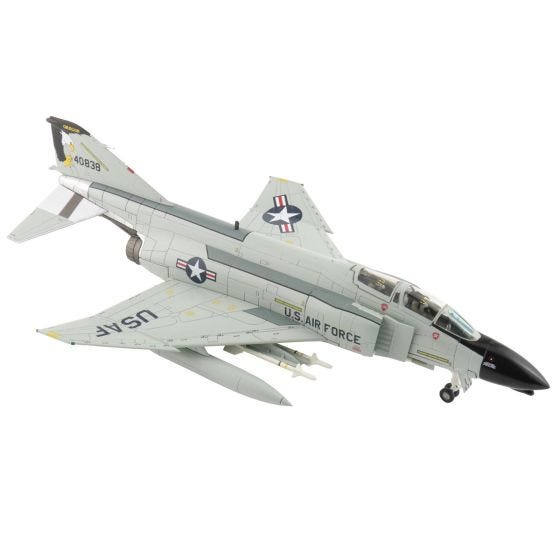
F-4C Phantom II Oregon ANG Die-Cast Model
In stock
Backordered
On display at the US Space and Rocket Center in Huntsville, Alabama.
Recognized as aircraft 64-0838, this F-4C Phantom II has a storied history of combat in Vietnam. Manufactured in 1965 and entering service just two years later, the aircraft was stationed from Ubon RTAFB in Thailand. Though tasked with securing aerial superiority in the region, all aircraft were restricted from directly attacking MiG fighters on their airfields in North Vietnam. Getting creative, the squadron crafted a daring plan for January 2nd, 1967. Provoking action by simulating an incoming group of bomb-laden F-105 Thunderchiefs, 64-0838 and three other Phantom IIs successfully intercepted 11 MiG-21 aircraft, downing 7 within just two minutes of engagement. Reassigned to 114th Tactical Fighter Training Squadron in 1983, the aircraft would provide pilots with important stick time over the following years. Retired from action on August 26th of 1988, the aircraft is on display at the US Space and Rocket Center in Huntsville, Alabama.
Features:
- Authentic paint scheme, engraved panel lines, printed decals, antennas, and surface details
- Deployed or retracted landing gear
- Open or closed canopy with pilot figurine
- Display stand included
- Measures 9.75”l with a 6.25” wingspan at 1:72 scale
- Officially licensed
History and Specifications:
Critically acclaimed for its service to many nations worldwide, the McDonnell Douglas F-4 Phantom II has created a long-standing legacy in the aviation world. Utilized extensively in Vietnam, the Phantom entered combat in 1960 as the primary multirole fighter aircraft. Boasting impressive speed and ordnance capabilities, the F-4 was well equipped to take on MiG fighters or eliminate enemy ground positions. With advanced radar and fire control systems, the aircraft had a distinct edge over contemporary Soviet fighters, which still relied largely on cannons as their offensive armament. Further enhancing situational awareness, the aircraft had a two-seat cockpit arrangement, which allowed pilot and weapons-systems-officer to work together in real time. Pilots put all their focus on maneuvering the aircraft, while the WSO called out threats and searched for firing solutions.