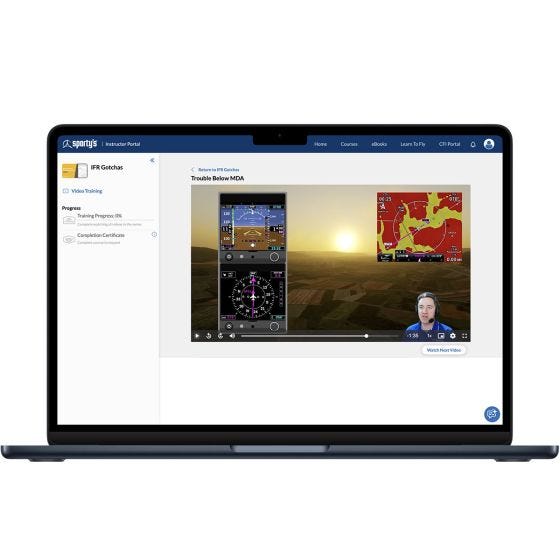
IFR Approach & Departure Gotchas Course (PilotWorkshops)
In stock
Backordered
Course Overview
You don’t need an Instrument Rating to understand the simplified concepts Ryan teaches in this course. The focus is purely on VFR flying. He “borrows” specific habits and techniques from IFR flying and shows you how to use them for additional protection, situational awareness, comfort, and control when flying VFR.
Flight 1: "A Short, Busy Trip"
From/To: Riverside, CA (KRAL) – Long Beach, CA (KLGB)
Briefing: 12 min
Flight: 23 min
Debrief: 2 min
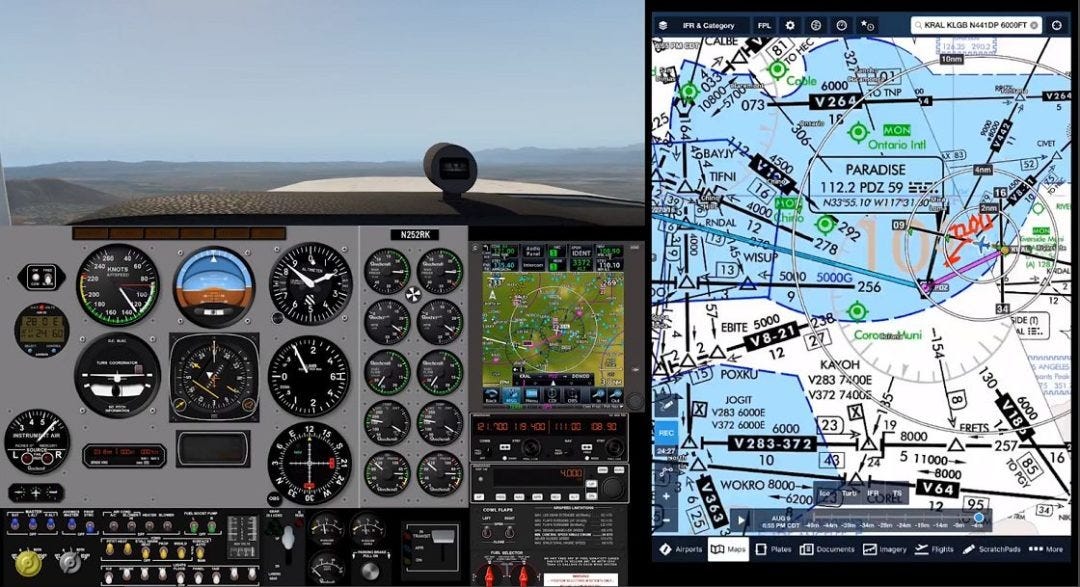
Planning is essential for IFR flight in the L.A. Basin, especially when ATC expects you to have all the insider information. This includes finding the right Tower Enroute Control route and filing that code in your flight plan. It might also include an ODP assigned by ATC for traffic flow that you’re required to fly. Ryan lightens the load by backing up visual navigation (but still under IFR) with published approaches and visual tools built into the Garmin GTN navigator. But then he uncovers an easy trap for the complacent when prioritizing tasks in a busy terminal environment.
Key Items: Tower Enroute Control route, assigned ODP, ForeFlight route advisor, GTN visual approach function, flight instrument checks, flowchecks and checklists, busy terminal environment, automation traps.
Flight 2: "Maximizing the GPS"
From/To: Long Beach, CA (KLGB) – Santa Maria, CA (KSMX)
Briefing: 14 min
Flight: 28 min
Debrief: 2 min
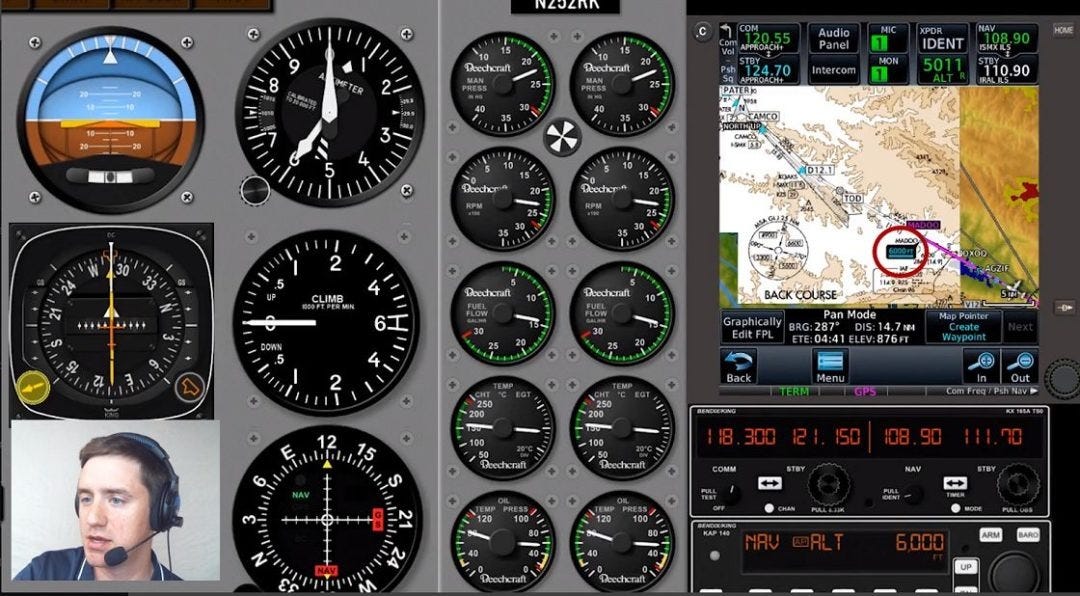
This trip starts with tips for complex taxi instructions and using published runway hot spots, along with annotating a chart in ForeFlight. The departure includes an RNAV SID, which requires understanding the buttonology, limitations, and legalities of the GPS. SID instructions and amendments get covered. On the arrival side, the GPS is used for descent planning on a steep approach with stepdowns inside the final approach fix, as well as the legalities and practicalities of GPS for a localizer backcourse. A missed approach reveals a trick to fly a missed approach hold while simultaneously loading the next approach, all with only one GPS. Use syn vis and terrain screens to keep track of where the hills lurk.
Key Items: Hot spots, climb via SID, back course guidance, estimating unpublished descent gradients, syn vis, terrain, flight plan editing
Flight 3: "Short-Field to Class C"
From/To: Oceano, CA (L52) – Monterey, CA (KMRY)
Briefing: 16 min
Flight: 25 min
Debrief: 2 min
Departing an airport without any published instrument procedures is made simpler and safer using the VFR sectional and a smart roll-your-own departure. The ForeFlight route advisor is helpful, but it’s better when you understand the ATC system for routings. (Hint: It’s not always about your departure and destination airports.) Planning also includes customizing the published VDP for your specific aircraft and customizing the VNAV profiles in the GPS for smart use of the autopilot (including the confusing VNAV Direct). Even with all that automation, Ryan demonstrates how some mental math acts as a backup and check that you pushed all the buttons correctly.
Key items: Departures from non-instrument airports, departure alternates, LP approaches with unofficial vertical guidance, adjusting the published VDP, customizing VNAV profiles
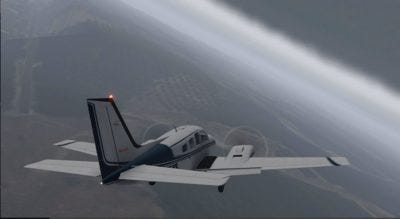
Flight 4: "Busy Airports and New-School Approaches"
From/To: Fullerton, CA (KFUL) – Santa Ana, CA (KSNA)
Briefing: 10 min
Flight: 23 min
Debrief: 2 min
We use old school techniques and new technology to navigate this highly congested airspace. First, we follow the freeway east after takeoff, then get turned direct after contacting departure. We use a few GPS tricks enroute for situational awareness, and have to manage an ATC frequency that is humming with activity. Finally, we are rewarded with an uneventful arrival to the Class C airport.
Key items: Non-standard diverse vector areas, RF leg, hybrid approaches (GPS/ILS), best forward speed, picking the best minimums, negotiating with ATC, legally using an expired database, autopilot tricks, digital ATIS
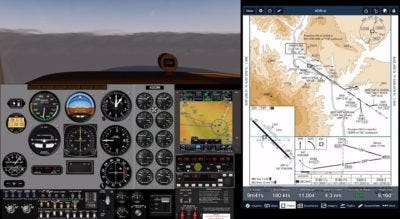
Flight 5: "Departure Traps and Non-Precision Approach Tricks"
From/To: Origin – Destination
Briefing: 17 min
Flight: 27 min
Debrief: 2 min
Many pilots avoid flying over, under, through—or even near—Class Bravo airspace. But often the best destinations are near these busy terminal areas. Here, we review the Flyway charts for the Los Angeles area and show you how published transitions can make transiting these areas easier and less stressful.
Key items: Calling ATC on the phone, decline a shortcut, cryptic approach clearances, non-standard climbs, textual ODP tips and traps, cold temp restrictions, mystery paths to IAFs, dead reckoning legs, best rules for circling
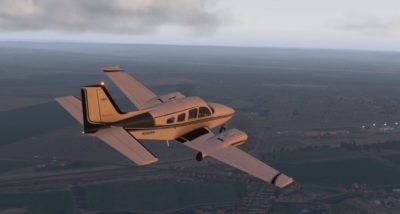
Flight 6: "Belt and Suspenders (GPS + VORs + Eyeballs)"
From/To: Santa Ana, CA (KSNA) – Burbank, CA (KBUR)
Briefing: 10 min
Flight: 19 min
Debrief: 2 min
This flight is a handful from takeoff until engine shut down. Departing a busy Class C airport, following vectors and then using radials to follow the published transition over LAX, monitoring busy radio frequencies, and finally landing at Burbank. Just another day flying in the LA basin.
Key items: Planning backups for GPS, graphical ODPs, simplified climb gradient planning, ForeFlight performance planning, creating custom holds in the GPS, loading airways, contact approach requests and best practices
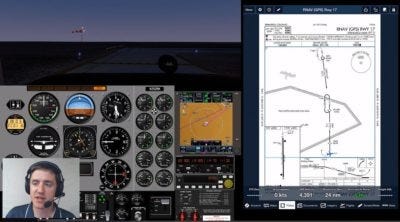
Flight 7: "Night Flight in the High Country"
From/To: Springfield, CO (8V7) – Denver, CO (KAPA)
Briefing: 12 min
Flight: 21 min
Debrief: 2 min
The diverse departure gives flexibility but nearby military airspace restricts it. Putting a custom waypoint by radial/distance from a VOR into the flightplan, the GPS, and ForeFlight makes things simple. The arrival into the Denver area brings STARs into the picture with potential descend via clearances, and the proximity of terrain at night means synthetic vision, profile views, and terrain overlays come into play. Loading vectors to final is fine on a GTN, but there are still tricks to be used when on vectors that let you almost read ATC’s mind.
Key items: Custom radial/distance waypoints, diverse departures, planning around SUAs, selecting STARs, descend via clearances, sidestep approach procedures, terrain awareness, high-speed approach
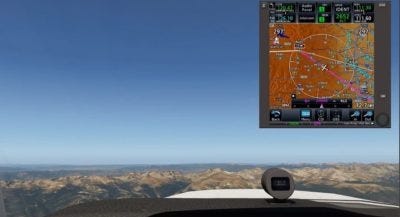
Flight 8: "Multiple Crossings, Steep Descents, and High True Airspeed"
From/To: Denver, CO (KAPA) – Eagle, CO (KEGE)
Briefing: 9 min
Flight: 17 min
Debrief: 2 min
How do you pick the right SID when there’s more than a page worth? ForeFlight can be a huge help if you know where to look. How can you descend below DA even when the airport isn’t in sight? It can happen with a fly visual segment, but you’d better understand what that means for a missed approach. This trip requires multiple stepdowns with multiple nav sources, and even with a good autopilot, it’s easy to fall behind.
Key items: Picking a SID, LDA with a glideslope, legal descent below the DA, arrival holds, alternate missed approach, automation gotchas, discrepancies between GPS and VOR courses, steep descents and high TAS
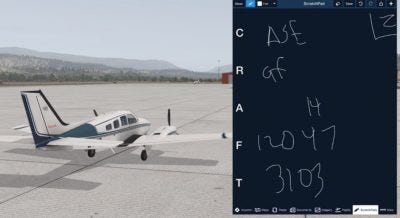
Flight 9: "Hurry to the Most Challenging U.S. Approach"
From/To: Eagle, CO (KEGE) – Aspen, CO (KASE)
Briefing: 12 min
Flight: 17 min
Debrief: 2 min
Sometimes the only way out is the Visual Climb Over the Airport, which happens here before a rush to get established on the notorious localizer into Aspen—which requires over twice the descent rate of a typical instrument approach. This means adjusting standard performance profiles in anticipation of the anvil descent, yet having a workable backup plan in case you don’t quite get down. Once you commit at Aspen, the complex missed approach is no longer an option.
Key items: Ruling out SIDs, visual climb over airport (VCOA), the notorious Aspen localizer approach, altering performances profiles, unusual missed approach, circling in the mountains, intercepting VOR radials with GPS
Flight 10: "Card Title Here"
From/To: Origin – Destination
Briefing: 00 min
Flight: 00 min
Debrief: 00 min
Enter flight description here.
Key items: Enter key items here
Flight 11: "Card Title Here"
From/To: Origin – Destination
Briefing: 00 min
Flight: 00 min
Debrief: 00 min
Enter flight description here.
Key items: Enter key items here
Flight 12: "Card Title Here"
From/To: Origin – Destination
Briefing: 00 min
Flight: 00 min
Debrief: 00 min
Enter flight description here.
Key items: Enter key items here
Flight 13: "Card Title Here"
From/To: Origin – Destination
Briefing: 00 min
Flight: 00 min
Debrief: 00 min
Enter flight description here.
Key items: Enter key items here
Pilot-inspired details
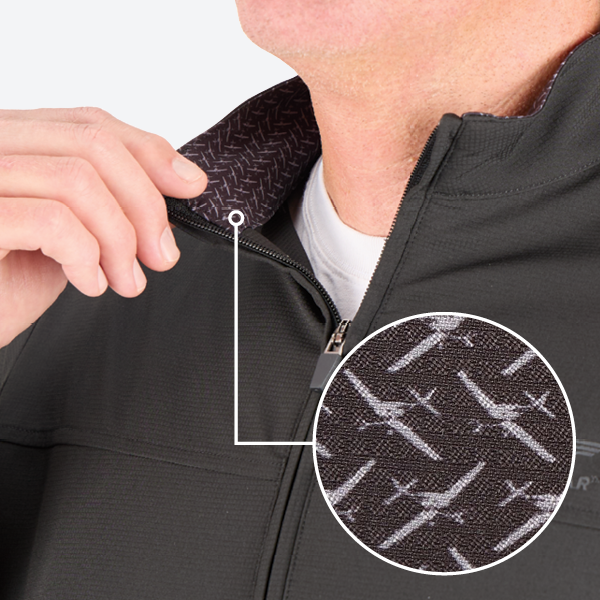
Custom collar graphics
A subtle Cirrus aircraft graphic inside the collar adds a distinctive detail that's revealed every time you put it on.
Spacious front pockets
Two generously sized front pockets provide convenient storage for your everyday essentials on the ramp or on the go.
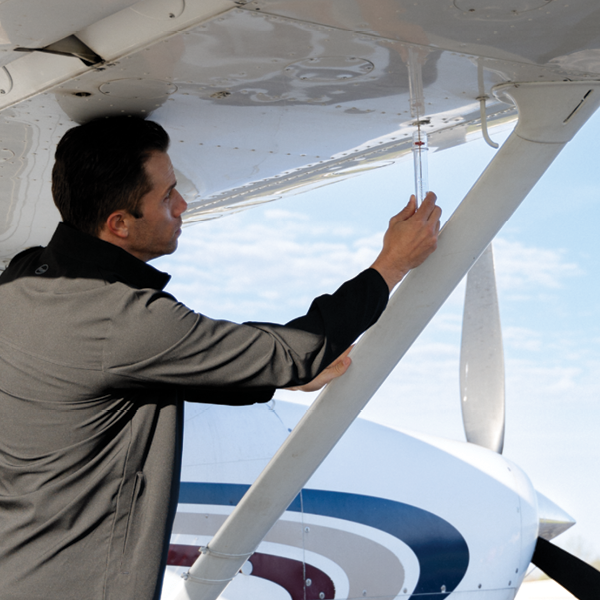
Four-way stretch comfort
The fabric moves naturally with you, providing unrestricted comfort from the flight line to the golf course and everywhere in between.
Meet Your Instructor
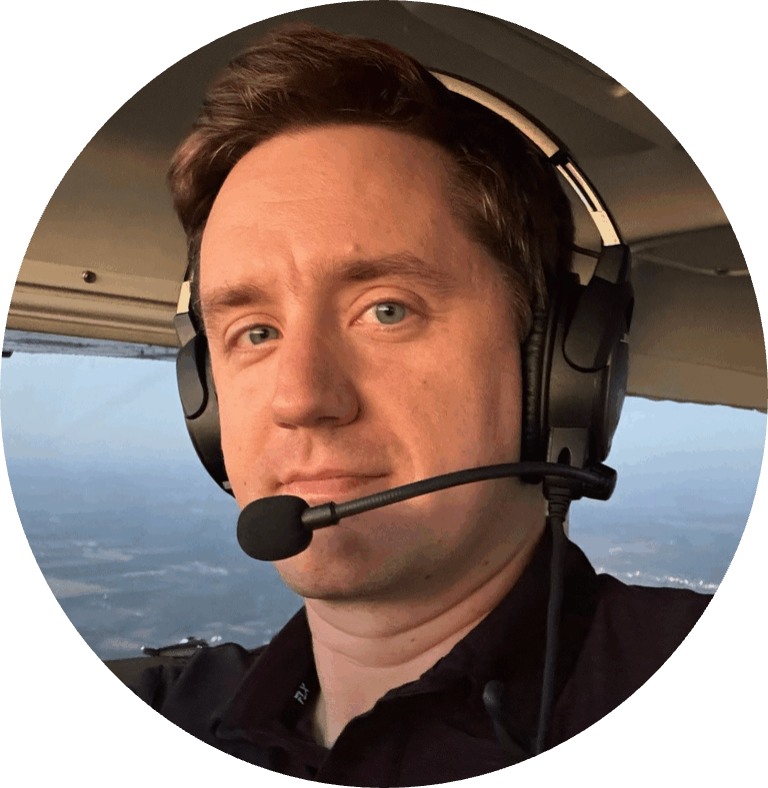
Ryan Koch
CFII, Director of Product Development
Ryan is responsible for the design and development of our new online training courses and pilot-friendly manuals, and oversees the course development team. He is also an active flight instructor specializing in instrument flight, is a flight simulator expert, and has experience doing remote flight instruction via simulators.
Ryan was the driving force behind the development of several PilotWorkshops online courses, including Instrument Rating Accelerator, IFR: The Missing Lessons, Garmin GTN: Next Level, and Advanced IFR. Ryan is also a contributing expert for PilotWorkshops’ IFR Mastery series and is a regular participant in the Instructor’s Roundtable. He teaches ground schools, runs ATC communications courses for both IFR and VFR pilots, and has developed curriculum for a variety of IFR proficiency programs, and a simulator-centered high school aviation program.
Frequently asked questions
Your training is available online via a secure, password-protected website. You can watch it on any computer, tablet, or phone.
No. Once you register your login credentials, they will never expire. You will always have access to the program.
Yes, with your online access you have the option to download the videos in the program.
Yes, with your login info, you can access the site from any device as often as you want for personal use.
Master the IFR Procedures That Challenge Pilots Most
Every IFR procedure is designed to be as standardized as possible—but when something isn't standard, there's usually an important reason. This course helps you recognize those hidden "gotchas" before they become a problem, so you can plan ahead, reduce workload, and fly instrument procedures with greater confidence. Through real-world demonstrations and practical explanations, you'll learn how experienced IFR pilots identify and manage these situations.
What You'll Learn
- Identify common IFR approach and departure "gotchas" before they catch you by surprise.
- Recognize non-standard procedures and understand why they exist.
- Reduce cockpit workload through better planning and preparation.
- Handle steep approaches, circling approaches, and complex RNAV procedures with greater confidence.
- Understand departure procedures including ODPs, SIDs, climb gradients, and VCOAs.
- Avoid common automation and GPS programming mistakes.
- Better manage missed approaches and other high-workload situations.
- Learn practical briefing techniques that help you spot hidden threats before every flight.
- Improve your understanding of modern Garmin avionics and how they can help you avoid common IFR traps.
Course Includes
- 13 scenario-based video lessons covering IFR approaches and departures.
- 3 bonus training videos on approach briefings, IFR departures, and Garmin avionics.
- Online streaming access from any computer, tablet, or smartphone.
- Optional video downloads for offline viewing.
- Lifetime access with no expiration.
Meet Your Instructor
Ryan Koch
CFII, Director of Product Development
Ryan is responsible for the design and development of our new online training courses and pilot-friendly manuals, and oversees the course development team. He is also an active flight instructor specializing in instrument flight, is a flight simulator expert, and has experience doing remote flight instruction via simulators.
Ryan was the driving force behind the development of several PilotWorkshops online courses, including Instrument Rating Accelerator, IFR: The Missing Lessons, Garmin GTN: Next Level, and Advanced IFR. Ryan is also a contributing expert for PilotWorkshops' IFR Mastery series and is a regular participant in the Instructor's Roundtable. He teaches ground schools, runs ATC communications courses for both IFR and VFR pilots, and has developed curriculum for a variety of IFR proficiency programs, and a simulator-centered high school aviation program.
Frequently Asked Questions
A: Your training is available online at Sportys.com/mycourses and in the Pilot Training App available on iOS and Android. You can watch it on any computer, tablet or phone.
A: No. Once you register your login credentials, they will never expire. You will always have access to the program.
A: Yes, you can download the videos for offline viewing from the Sporty's Pilot Training iOS or Android app.
A: Yes – with your login info, you can access the site from any device as often as you want for personal use.