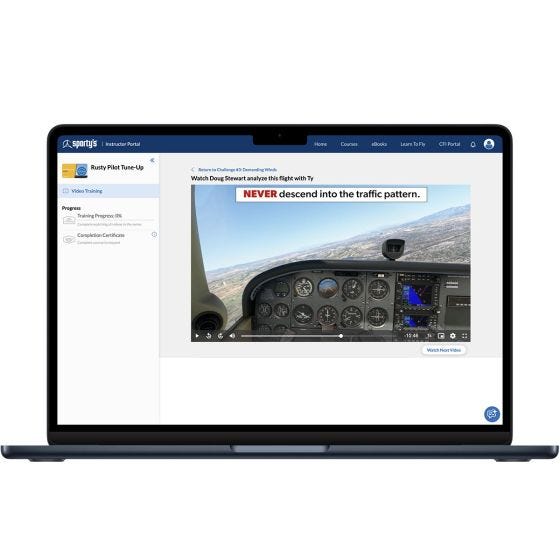
Pilot Workshops Rusty Pilot Tune-Up Course
In stock
Backordered
Where is YOUR Rust?
Most General Aviation pilots struggle to maintain a high level of proficiency over time. Life sometimes gets in the way, and a few months away from flying can seem like an eternity. Or, maybe you fly regularly—but it’s been a while since you did a long cross country, flew in highly-congested airspace, did airwork in the practice area, flew at night, or worked on specific skills you knew you were rusty in.
The fact is, most pilots are rusty in some areas at any point in time.
Traditional rusty pilot courses are too basic for most of us. They are designed for pilots who haven’t flown in many years (or even decades) and need to relearn everything before they can get back into flying. Those courses cover a wide range of topics, but there’s no focus on proficiency.
This course is different. Rather than taking a broad stroke approach, we wanted to help pilots identify their own unique areas for improvement, and give them the tools to knock off the rust in the areas they struggle with the most.
Purpose-Built Flights with Expert Analysis
We asked a few of the best instructors in the country to come up with tailored flying challenges designed to test a rusty pilot’s skills and bring their weaknesses in critical areas to the surface. They created seven flying challenges covering a wide range of pilot skills, techniques, and decision making.
You’ll follow our Rusty Pilot (Ty Shuff) through each flight. You’ll see him struggle, and succeed. You’ll watch him make mistakes, and recover. He walked away from each challenge with a lot to think about and work on—and you will too.
Each challenge ends with an expert analysis. Our instructors analyzed each flight in detail to see what went well, discuss the mistakes, and give practical feedback to help the pilot improve. By hearing the experts analyze the flights, you’ll discover how to reach (and retain) a higher level of proficiency.
Meet Ty: The Rusty Pilot
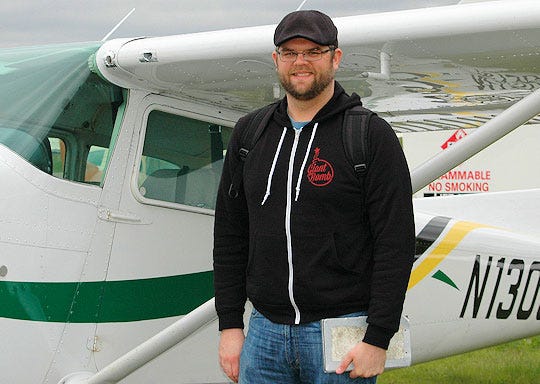
Ty Shuff is an Instrument-rated Private Pilot. Long before climbing into the cockpit of a real GA airplane, Ty spent thousands of hours immersed in PC-based flight simulation at home (using PilotEdge for ATC, and often streaming his flights on Twitch). A discovery flight out of Lawrence, MA quickly led to his private pilot license, his instrument rating, and lots of flights around New England in a 172, an Archer, and a 182.
But with a young child and the distractions of the pandemic, Ty found both his real-world flying and his simulated flying dwindling. After a few years, his skills were definitely in need of a tune-up. He was just the rusty pilot we were looking for.
Your Instructors
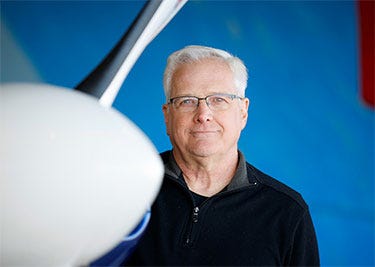
Bruce Williams is the owner of BruceAir, LLC, an aviation consulting, training, and pilot-services company based in Seattle, WA. He has been a pilot since the early 1970s, and is a certified flight instructor and FAASTeam representative in the Seattle area. He also instructs at Galvin Flying Services at Boeing Field.
Today, he focuses on training in technically advanced aircraft (TAA), the Beechcraft Bonanza series, and stall/spin/upset recovery courses in an Extra 300L aerobatic aircraft. He is the author of two books about using PC-based simulation to complement flight training, plus many features on a variety of training topics for well-known aviation periodicals.
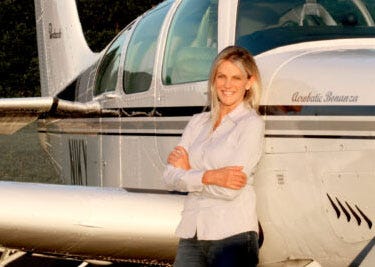
Catherine Cavagnaro learned from one of aviation’s great instructors: Bill Kershner. At Ace Aerobatic School she uses a Cessna 152 Aerobat and an acrobatic Bonanza to help pilots understand their airplanes and explore unusual attitudes.
She writes the monthly Flying Smart column for AOPA Pilot Magazine and serves as a Designated Pilot Examiner in Tennessee.
Catherine was the 2020 FAA CFI of the Year, 2018 FAA Safety Representative of the Year, and in 2022 was inducted into the National Flight Instructor Hall of Fame.
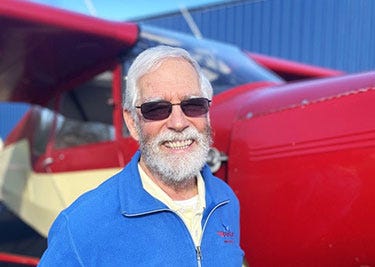
Doug Stewart is one of the most experienced flight instructors working today, with over 13,000 hours of dual instruction given in everything from J3 Cubs to single-engine turboprops and twins. He’s a 12-time Master Certificated Flight Instructor, Gold Seal Instructor, and Designated Pilot Examiner.
Doug was the National Certificated Flight Instructor of the Year in 2004, and is one of the founders of the Society of Aviation Flight Educators (SAFE). He’s a member of the FAA General Aviation Joint Safety Committee and has been doing FAA safety seminars since before there even was a FAASTeam. In 2024, Doug was inducted into the National Flight Instructor Hall of Fame.
Course Overview
Below are the challenge flights that our instructors created to test Ty’s skills, and provide guidance.
The core training videos focus on the instructor’s post-flight analysis of each flight with Ty. We edited them to deliver the most impactful lessons and takeaways from each challenge without having to watch the entire flight. You’ll see the detailed flight debriefs, along with the most useful inflight footage.
As bonus viewing we’ve also included the complete flight videos that Ty sent to the instructors. They include the preflight planning and weather briefing, the flight itself, and Ty’s self-debriefs. In total, there are 7.5 hours of raw flight videos for those who enjoy watching things unfold in real-time.
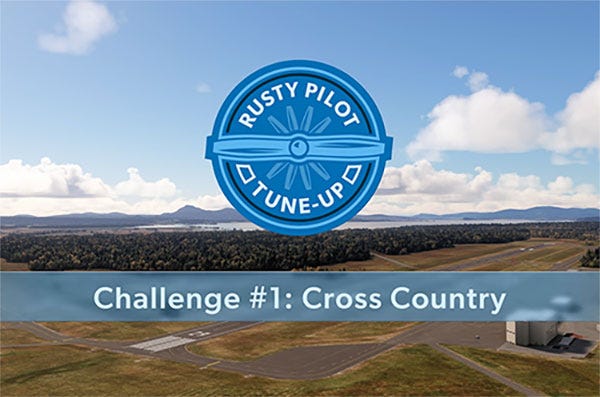
Challenge #1: Cross Country
37 minutes
- Select the best possible route
- Identify all potential weather threats
- Continually monitor weather enroute
- Maximize cockpit technology
- Use checklists appropriately
- Brief the arrival to avoid surprises
- Decide if a go-around makes sense
Ty gets back in the game by planning and flying a long cross-country flight in the Pacific Northwest. Mountains, airspace, and changing weather provide plenty of challenges, and he comes away with lots to work on.
Challenge #2: Busy Airspace
28 minutes
- Plan a flight through Class B airspace
- Make a backup plan just in case
- Review all airspace along the route
- Follow airspace entry requirements
- Find ways to reduce workload
- Prepare to arrive at a big, busy airport
- Adjust traffic pattern for parallel runway
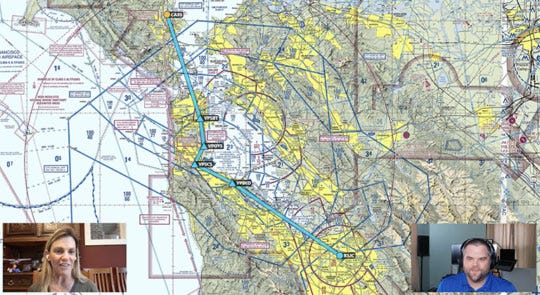
Flying the San Francisco “Bay Tour” is one of the most unforgettable—and demanding—VFR flights you’ll ever make. Ty puts his rusty skills to the test and learns how careful planning and preparation make all the difference.
Challenge #3: Demanding Winds
32 minutes
- Choose the best altitude for comfort
- Catch something with a takeoff briefing
- Negotiate to sightsee inside Class D
- Fly the right airspeeds throughout
- Fly consistent turns around a point
- Make adjustments in the traffic pattern
- Fly touch and goes–in a crosswind
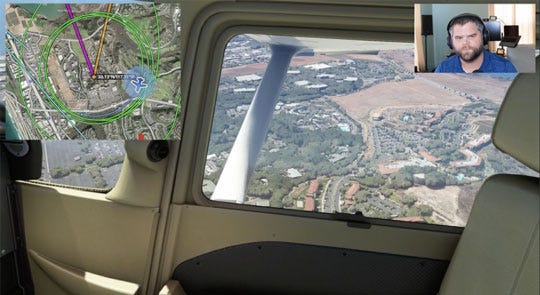
Ty confidently embarks on a short round-robin flight in southern California. But a hilly terrain and a steady wind force him to get back to basics. He discovers that when your skills have atrophied, it’s tough to stay ahead.
Challenge #4: Traffic Pattern
30 minutes
- Research an unfamiliar airport
- Plan a non-direct route for safety
- Develop a mental picture of traffic
- Handle a congested radio frequency
- Adapt the traffic pattern as required
- Avoid a potential runway incursion
- Adjust practice based on fatigue
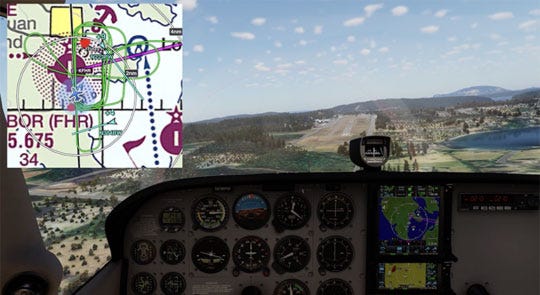
Pattern work at a non-towered airport can be fun, but juggling everything can be overwhelming. On a practice flight in the San Juan Islands, Ty gets a workout flying the airplane, making quick decisions, and communicating.
Challenge #5: Night Transition
33 minutes
- Prepare for night flight
- Review all potential obstacles
- Plan the flight to ensure terrain clearance
- Use the autopilot to reduce workload
- Manage cockpit flows in the dark
- Use synthetic vision for extra safety
- Refer to the GPS for approach guidance
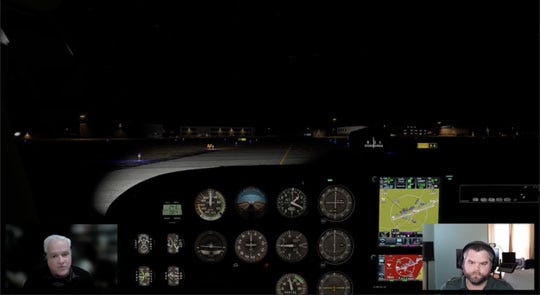
Ty’s experience flying at night around Boston doesn’t prepare him for the much darker sky in Eastern Washington. With some help from his (rusty) IFR skills, he learns to mitigate the increased workload and risk.
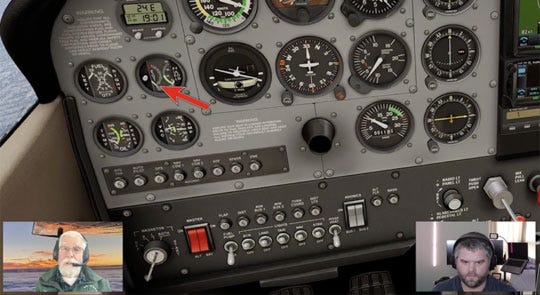
Challenge #6: Surprise Emergency
32 minutes
- Create a takeoff abort plan
- Identify emergency landing options
- Deal with an unexpected ATC request
- Recognize an engine abnormality
- Respond to an emergency
- Run the checklist from memory
- Make a deadstick landing
An engine failure will challenge any pilot—especially over a highly populated area like the LA Basin. Ty finds that his survival depends on early recognition of abnormalities, decision-making under pressure, and meticulous execution.
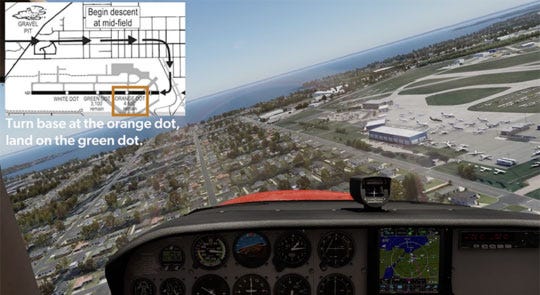
Challenge #7: Oshkosh Fun (bonus)
21 minutes
- Review the NOTAM
- Follow the Fisk VFR Arrival procedure
- Follow ATC’s instructions
- Avoid traffic using ADS-B and eyeballs
- Fly the arrival with precision
- Correct for wind
- Land on the assigned colored dot
Flying into AirVenture is a high-stress “bucket list” flight for most pilots. Ty confirms that the secret to a smooth arrival is carefully briefing and following the NOTAM. And he learns that the secret to a smooth landing is remembering that—even at Oshkosh—you’re PIC.
Why We Used a Flight Simulator
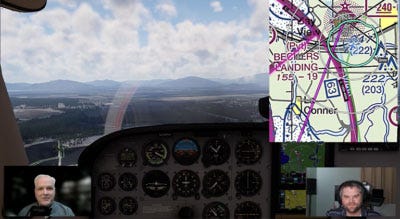
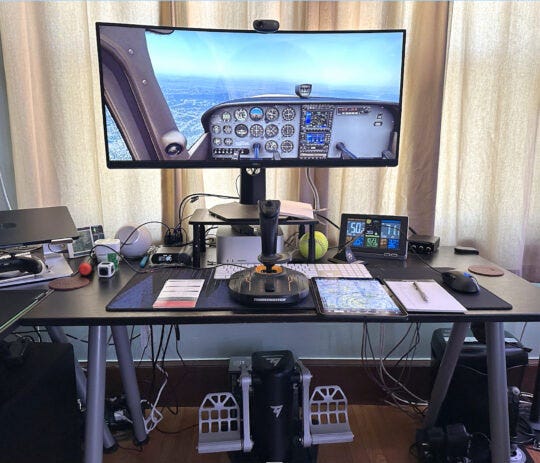
We had Ty fly these challenges using a flight simulator so the instructors would have more freedom and control in designing the scenarios. We added increased realism and the workload of radio communication by using live ATC services provided by PilotEdge. In addition, Ty used ForeFlight connected to the sim to provide additional situational awareness, often with real-world weather adding unpredictability. This gave him a safe yet realistically stressful environment in which to succeed … and fail.
We captured every screen on video, selected the best footage, edited it together, and added on-screen callouts and notes so you won’t miss a single detail.
Frequently Asked Questions
A: Your training is available online via a secure, password-protected website. You can watch it on any computer, tablet, or phone.
A: No. Once you register your login credentials, they will never expire. You will always have access to the program.
A: Yes, with your online access you have the option to download the videos in the program.
A: Yes, with your login info, you can access the site from any device as often as you want for personal use.