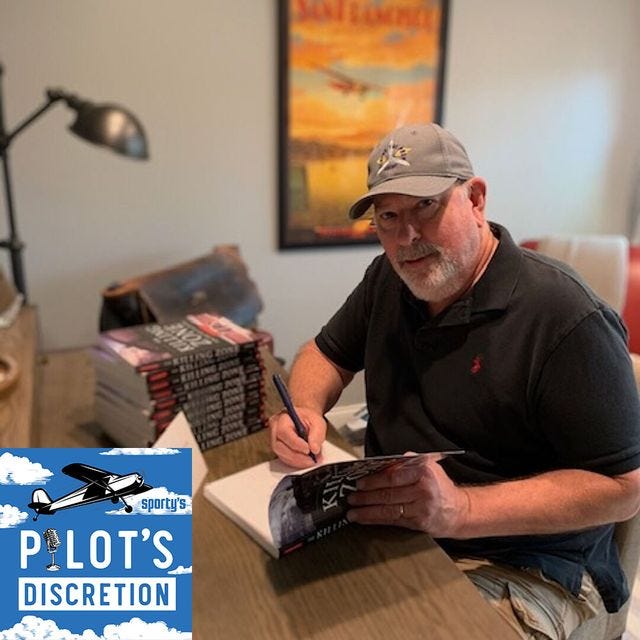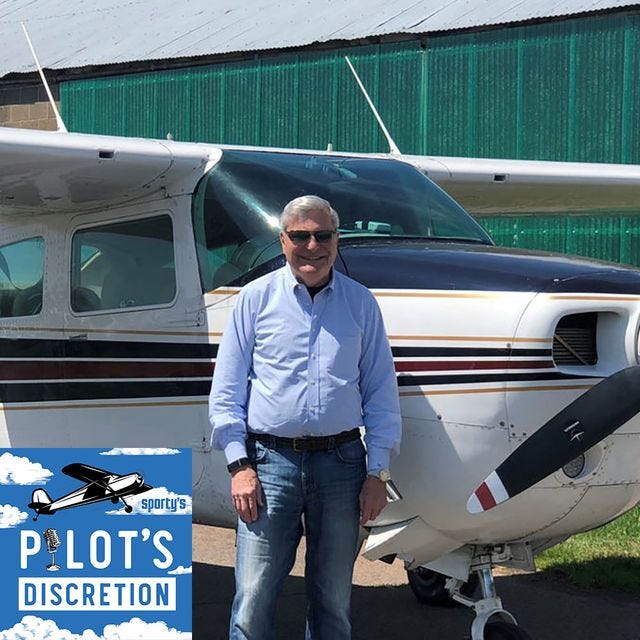

Pilot's Discretion Podcast, episode 124
From the Space Shuttle to F-15 fighter jets to his homebuilt VariEze, Charlie Precourt approaches every flight with the same discipline. In this episode he shares some of the lessons learned from his one-of-a-kind career, including the power of visualization, realistic personal minimums, and flight training that goes beyond checking the box. Charlie also shares some fascinating stories from his days at NASA, including landing the Space Shuttle and docking with the Mir space station. In the Ready to Copy segment, Charlie talks about underrated airplanes, flying with a test pilot’s mindset, and lessons learned from Russian pilots.
Listen online:
Listen on your favorite app:
Quotes:
- GA pilots’ approach to safety: “I think most pilots like to learn through osmosis, not through, ‘I got to take another check ride’”
- Why personal minimums work: “you use personal minimums as a way to project into the future about how things might intrude on a mental model of success”
- The job of a pilot: “to respect the machine, to listen to it, to understand what our own capabilities are with it and our and—more importantly—our limitations.”
- Upset recovery: “what you should be doing is: unload, roll to the nearest horizon, manage your power for either an overaggressive climb or an overaggressive descent, and get it back to level flight.”
- Crew resource management: “I would simply say that a crew that is not harmonized is more challenging than single pilot. And the reason for that is you're not only managing the airplane, you're managing the other guy or gal.”
- Using SOPs to reduce mental bandwidth: “a pilot's brain can be in one of three places. It can be in the past, the present, or the future. It needs to be in each at certain points in time.”
- Space Shuttle energy management: “where it became really fascinating was thinking about the L over D of the glider, as we called it, which it wasn't. It was more of a rock. Its best L over D was close to five”
- The goal for reentry: “touch down 2,500 feet down the runway at 195 knots, starting overhead the field at 45,000 feet at .95 Mach. And it's four and half to five minutes to make that descent from that point.”
- Docking with Mir: “as you got in closer, to about a thousand feet or so, we would transition it mostly hand control all the way in. And then as you got in closer, it started to feel a little bit like formation flying. But again, there's no atmosphere. So it's all about a pulse here and a pulse there.”
- Preparing to fly a new airplane type: “There is so much gold in that POH to tell you the personality of this airplane, where it's going to bite you, and where you can use it to your advantage.”
- Learning airplane systems: “the airplane will talk to you. Do you know what it's saying when it does talk to you?”
- Astronaut advice: “we make sometimes split-second decisions from which there's no going back and the consequences of which can be life and death. So in order to make that decision so that it comes out on the good side of things, you have to have thought about it beforehand”
Links:
Learn more:
Listen to every episode of Pilot's Discretion here
Have a question or comment? Email us: podcast@sportys.com