
Let’s be honest—tying down an airplane isn’t the glamorous part of flying. No one brags about their knot-tying technique at the FBO. But whether you’re training in a 172, flying a taildragger into a grass strip, or parking on a windy ramp overnight, securing your aircraft is one of the most important things you’ll do all day. Your airplane (and the one parked next to it) will thank you.
The challenge? Not all aircraft tie-downs are created equal. With so many options on the market—anchors, straps, ratchets, ropes—figuring out which system is right for your airplane and your mission can feel like overthinking a crosswind landing. Below, we break down some of the best aircraft tie-down systems available and explain what makes each one worth a spot in the back of your aircraft.
Best Overall Value: Flight Gear ChockMate Tie-Down Kit
Price: $119.95
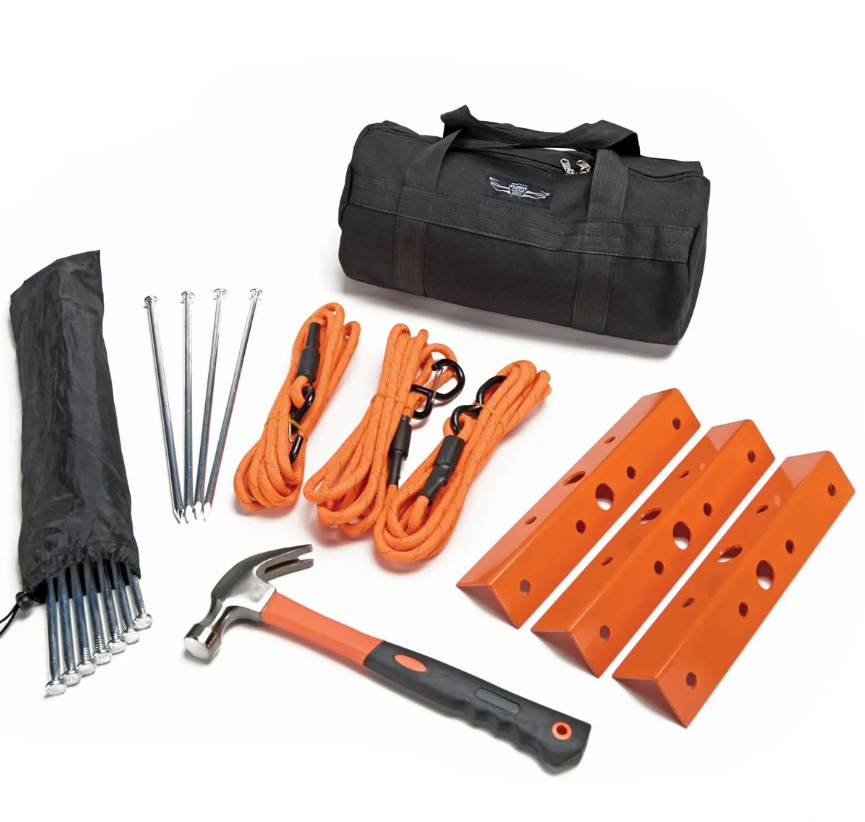
If you want a complete aircraft tie-down kit that works on both grass and pavement, the Flight Gear ChockMate Tie-Down Kit delivers exceptional value.
This all-inclusive system is designed for pilots who need dependable ground anchoring when permanent tie-down rings are not available.
Features:
- Three anchor chocks for stability and dual-purpose wheel chocking
- Twelve heavy-duty nails for securing anchors in soft terrain
- Three 12-foot reflective orange ropes rated to 1,760 lbs each
- Rubberized quick-snap hooks
- Dual-purpose hammer with nail-removal forks
- Rugged canvas storage bag
Whether you are flying into a backcountry strip or stopping overnight on a cross-country trip, this kit provides everything required to secure your aircraft.
Best for Replacing Worn Ramp Ropes: Flight Gear Pull-Down Tie-Down
Price: $59.95
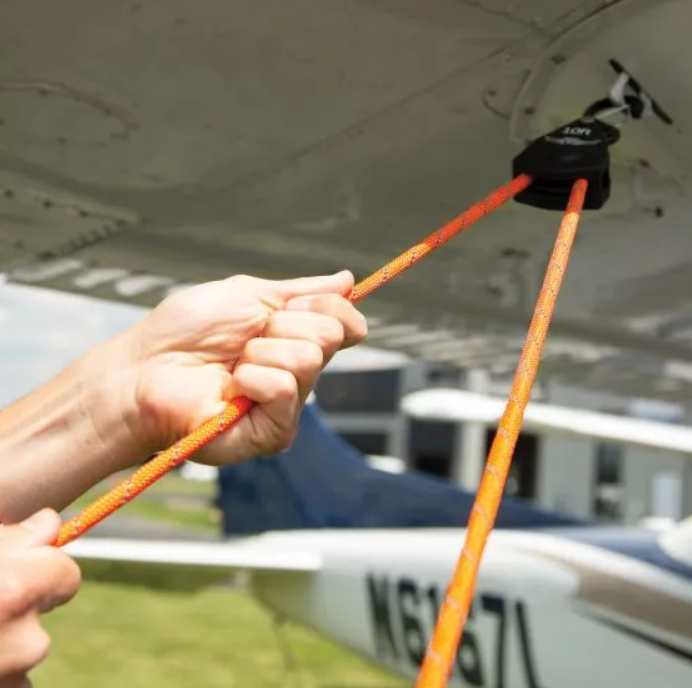
Arriving at an airport only to find frayed or weathered tie-down ropes is common. The Flight Gear Pull-Down Tie-Down offers a simple, reliable replacement solution.
Attach one hook to your aircraft, secure the other to the ramp anchor, and pull down to tension using the integrated ratcheting system.
Features:
- High-visibility orange ropes
- Two 10-foot ropes and one 6-foot rope
- 3/8" durable rope construction
- Pull-down ratchet tightening system
- Ratchet break strength: 250 lbs
- Rope break strength: 440 lbs
- Lightweight design (approximately 4 lbs)
- Includes a carrying bag
These have been installed on more than 20 aircraft at Sporty’s Academy for year-round use and continue to perform reliably.
Best Strap-Style Tie-Down: Flight Gear All-Weather Tie-Down
Price: $49.95
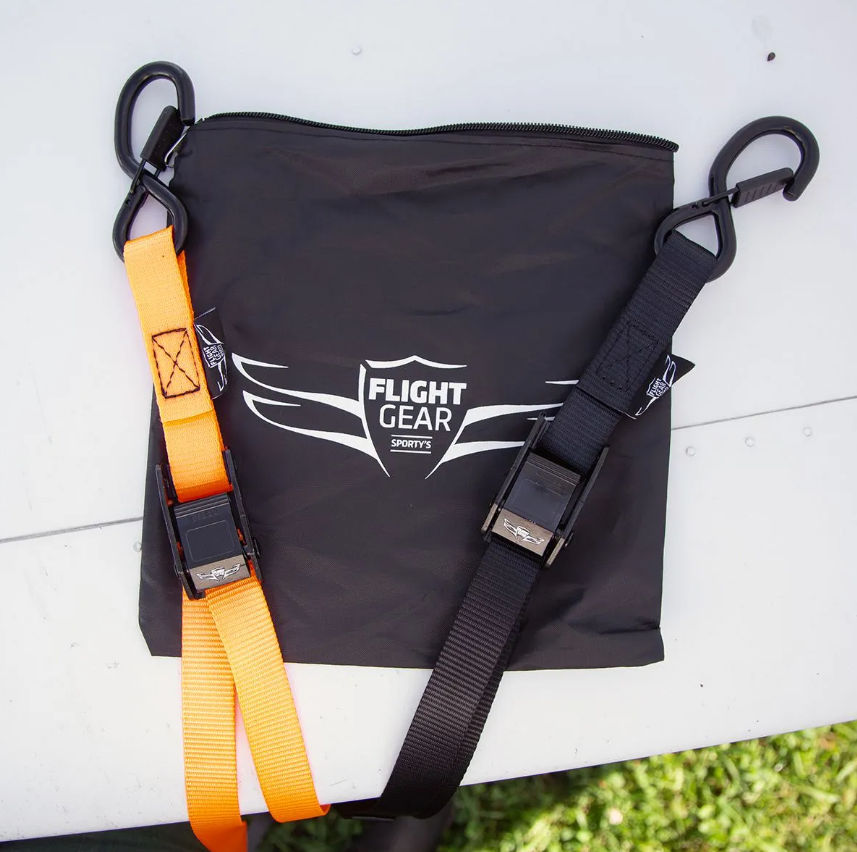
The Flight Gear All-Weather Tie-Down system is designed for pilots who prefer quick-attach straps with secure cam buckles.
Built for both high-wing and low-wing aircraft, this system combines strength, convenience, and professional appearance.
Features:
- Heavy-duty coated snap hooks
- Two 10-foot straps and one 6-foot strap
- Black E-coated cam buckle with push-lever release
- 1,100 lb break strength
- 550 lb working load strength
- Available in orange or jet black
- Includes storage bag
Pilots appreciate the ease of use and confidence these aircraft tie-down straps provide.
Best Anchor System: The Claw® Aircraft Tie-Down Kit
Price: $139.95
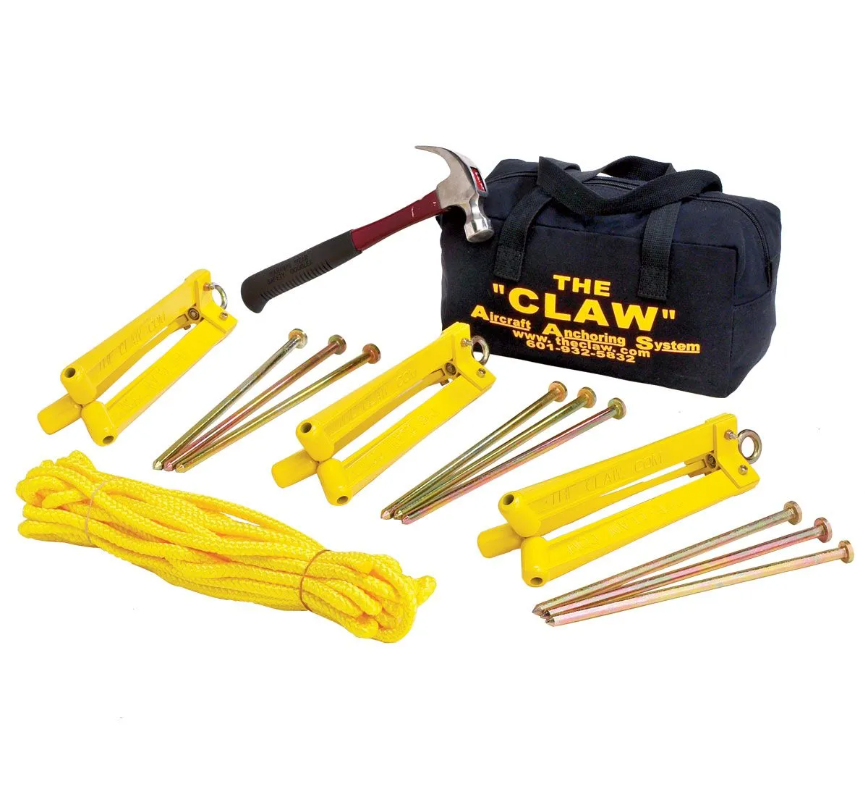
The Claw® Aircraft Tie-Down Kit is one of the most recognized aircraft ground anchor systems in aviation.
Its mechanical advantage design increases grip as tension increases. In independent testing at Sporty’s, it held up to 480 lbs of force.
Features:
- Mechanical advantage anchor design
- Three-arm anchor system for optimal ground grip
- 20 feet of rope
- Three anchors
- Nine spikes
- Custom spike-removal hammer
- Carrying bag
- Weighs 8 lbs
The Claw remains a popular choice for pilots attending large events such as AirVenture and for those who want a proven, heavy-duty aircraft tie-down system.
Which one should you choose? It comes down to where and how you fly. If you’re heading into grass strips or soft terrain, the ChockMate or the Claw gives you the ground anchoring you need. Parking on paved ramps with existing tie-down rings? The Pull-Down Tie-Down or All-Weather Tie-Down makes securing your airplane quick and straightforward. Each system serves a purpose, but the goal is the same—keep your aircraft exactly where you left it.