
Start with Sporty's Learn to Fly Course
This complete course has everything you need to:
- Pass your FAA tests
- Earn your license
- Be a safe pilot
It works on all your devices and your purchase includes lifetime free updates. You can try a free demo here .

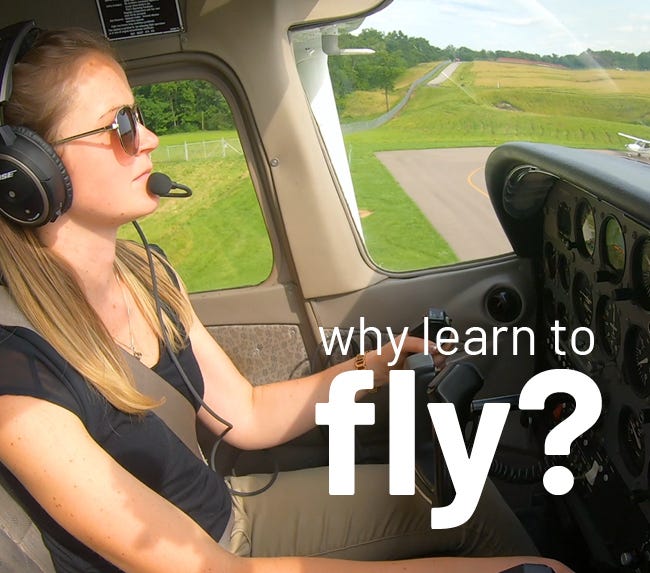
Learning to fly will unlock a world of possibilities and give you unparalleled freedom to see the world. It is a truly unique experience—one of the last great adventures in our modern life. It is challenging, rewarding and flat out fun!
Some people start flying to make a career out of it, eventually working as a professional pilot, and right now is a great time to pursue a career in aviation. After a brief pause during the early days of the Covid pandemic, airlines are hiring again in record numbers. We’ve seen starting pay at the regional airlines rise, along with new, creative compensation packages. In the airline industry, where seniority is supreme and determines everything from pay to aircraft assignments and quality of life, the opportunity exists to land destination jobs much earlier in your career than has ever been possible.

Remember though, there are numerous jobs in aviation besides just airline pilot. Career opportunities include business aviation pilot, flight instructing, cargo airlines, military flying, law enforcement and many more Regardless of the path you choose or your motivation to begin, time is of the essence. Don’t delay, as each year of inaction is time wasted not enjoying this amazing adventure—and time could literally be costing you hundreds of thousands in future earnings.
For other pilots, flying is a convenient and cost-effective method of personal or business travel. You can set your own schedule, use airports that airlines don’t serve and leave the hassles of security lines behind. For business use, airplanes allow you to do more in one day than you could do in a week traveling by airline. Flexibility, privacy, and freedom are all great reasons to use a personal airplane for travel.
In the end, though, many pilots fly for pure enjoyment, taking local flights on nice days to see new and interesting places. You can take a friend and fly for lunch at another airport, tour local landmarks, or attend fly-ins to meet other pilots. No matter where you’re headed, being up in the air is the greatest thrill of all.
Whether you want to fly for a living or just for fun, general aviation offers a safe, rewarding and surprisingly affordable way to get around.
Who can be a pilot?
There is no “right” type of person to become a pilot. Aviators come from all kinds of backgrounds, each with unique reasons for flying. The good news is, you can take lessons at any age—there is no minimum and no maximum.
Some requirements to keep in mind:
What's the right pilot certificate?
When you start flying, you may be presented the choice of pursuing your Sport Pilot, Recreational Pilot or Private Pilot certificate. Understanding the differences between them will help you to choose the path that is best for you.

Sport Pilot – The Sport Pilot certificate allows you to earn your pilot’s license in as little as 20 hours of training, and does not require a medical certificate; however, a sport pilot must hold at least a current driver’s license. In practice, most students will require more than the minimum flight training experience. You are, however, limited to flying Light Sport Aircraft (LSAs), defined as a maximum of 1320 lbs. maximum weight and 120 knots maximum speed (a Piper Cub, for example). You’ll need to check on the availability of light sport aircraft at your local flight school as the aircraft are not as readily available as other category aircraft.

Recreational Pilot – Another great option for new pilots to get in the air quickly is the Recreational Pilot Certificate, which requires a minimum of 30 hours of flying. While 30 hours in the minimum, similar to Sport training, in practice, pilot will typically take closer to 40 hours of training to obtain the required level of safety and proficiency.
The Recreational certificate allows you to carry a passenger during the day in good weather, and in aircraft with up to four seats and up to a 180 horsepower engine (a Cessna Skyhawk or Piper Cherokee, for example). This is perfect for local flights with family or friends, and will get you into the air quickly. You can also add additional privileges or transition to the Private Pilot certificate when you’re ready—you’ll just do some additional training with an instructor on cross country, night flying and/or in airspace requiring communication with Air Traffic Control.

Private Pilot – The Private Pilot certificate has been around the longest, and is often what people mean when they say they “got their license.” There are fewer restrictions on the type of airplane you can fly and the places you can fly to, and there are plenty of options for addon privileges, like Instrument and Multi-Engine ratings. The minimum training time is 40 hours—at least 20 with an instructor and 10 solo—but most students take 60-80 hours.
For all three of these certificates, you’ll be required to complete ground training (which can be largely accomplished online), a written exam, and a flight test. Also remember that you can change your mind as you train. For example, Sport Pilot training time will count towards a Recreational or Private license. It’s also worth noting, that every pilot has to solo (fly the airplane by himself) as a first step so there is no need to make a decision quickly. The most important first step, take an introductory or discovery flight at your local airport!
How do I choose a flight school?
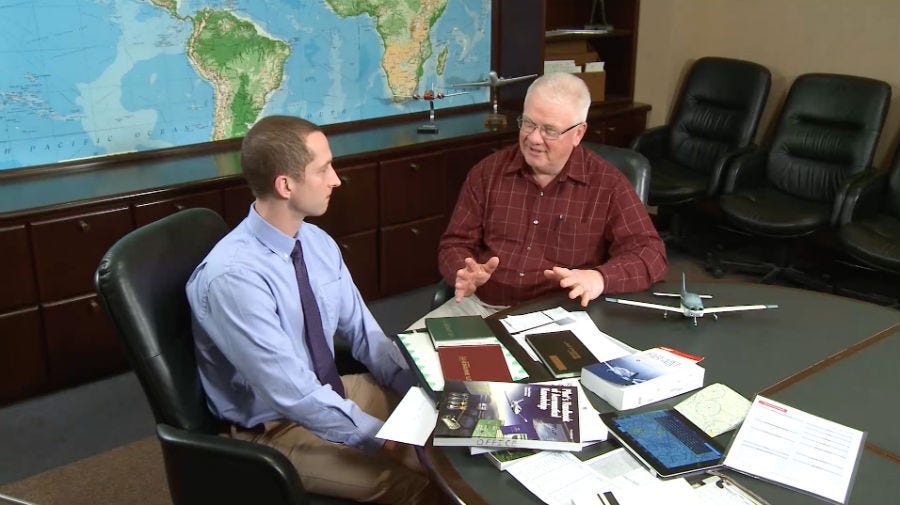 Finding a flight school is one of the first steps towards earning your license. So
how to find one? Our flight school database is a good place to start—it shows
over 1,000 flight school locations in the US. You can also do a basic search at
your favorite internet search engine, or ask other pilots for recommendations.
Finding a flight school is one of the first steps towards earning your license. So
how to find one? Our flight school database is a good place to start—it shows
over 1,000 flight school locations in the US. You can also do a basic search at
your favorite internet search engine, or ask other pilots for recommendations.
Once you’ve located some schools, choosing the right one is one of the most important choices you’ll make in training. More than anything, a flight school needs to be a good fit for you: your schedule, your goals, and your personality.
Visit flight schools near you. Meet with the staff and tour the facilities and airplanes. Ask any questions you may have about the flight training process, flight school policies, scheduling, rates, and instructors. Your personal opinion counts here. Do the airplanes look clean and well-maintained? Are the instructors friendly and helpful? What is your general feeling about the school as a whole?
Flight schools vary from large training facilities to one airplane flight schools with part-time instructors. But bigger doesn’t always mean better, so look for some signs of a well-run flight school:
- A bricks-and-mortar facility with classrooms, helpful teaching aids, and a supportive learning environment.
- A staff of flight instructors from which to choose.
- A proven training curriculum.
- A well-maintained fleet of training aircraft.
- An efficient scheduling system for aircraft and instructors.
- Flexible hours to fit your training schedule.
- Experience in teaching primary students.
- Financing arrangements to help you manage the cost of learning to fly.
- Some schools that cater to aspiring professional pilots even offer housing and job placement opportunities.
You can also train with an independent instructor, outside of a formal flight school. This can be a good option if the instructor is someone you know and respect and whose schedule fits yours. But make sure to ask about access to an aircraft—if you’re constantly canceling lessons because you can’t rent an airplane, you’ll soon get frustrated.