Emergency Strategies: Manual Bundle (PilotWorkshops)
Free Shipping!

In stock
Backordered
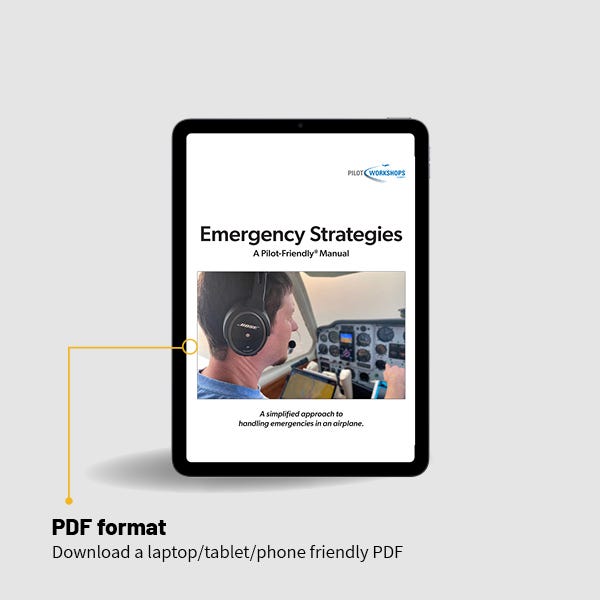
A simplified approach to handling emergencies in an airplane
- 129 pages—fully illustrated with color photos and graphics
- Scenario-based format with action steps and key skills
- Clear explanations, real-world examples, and pro tips
- Digital manual looks great on an iPad; keep it in your EFB app for easy access
- Spiral-bound 8.5” x 11” printed manual
Learn to think better when it matters most
 Hoping that an emergency doesn’t happen to you isn’t a strategy. The team at PilotWorkshops created this book to show you just how much control you actually have.
Facing an actual in-flight emergency can be surreal. Sometimes pilots don’t hesitate and immediately fall back on their training. But often, gripped by fear, they’re reluctant to admit that an emergency is actually happening. Instead of addressing the situation, they waste precious time watching it unfold. What’s needed is a way for pilots to mentally practice and build a flexible response to any emergency.
Most books about handling in-flight emergencies focus on procedures. This book is different. In this manual, Pilot Workshops groups the nearly infinite number of emergency situations into 11 general categories, and presents strategies you can use to handle those kinds of emergencies. The goal is to help you build a framework to address each kind of emergency more effectively.
This approach works because successfully resolving an emergency is a process you work through, not purely an exercise in memory recall and action. Memory items, flow patterns and checklists are only parts of the puzzle. You’ll learn the most effective mindset for approaching each type of emergency, no matter what specific actions you need to take (given the airplane you’re flying, your experience, and the exact situation you find yourself in).
A new way to hone your emergency skills
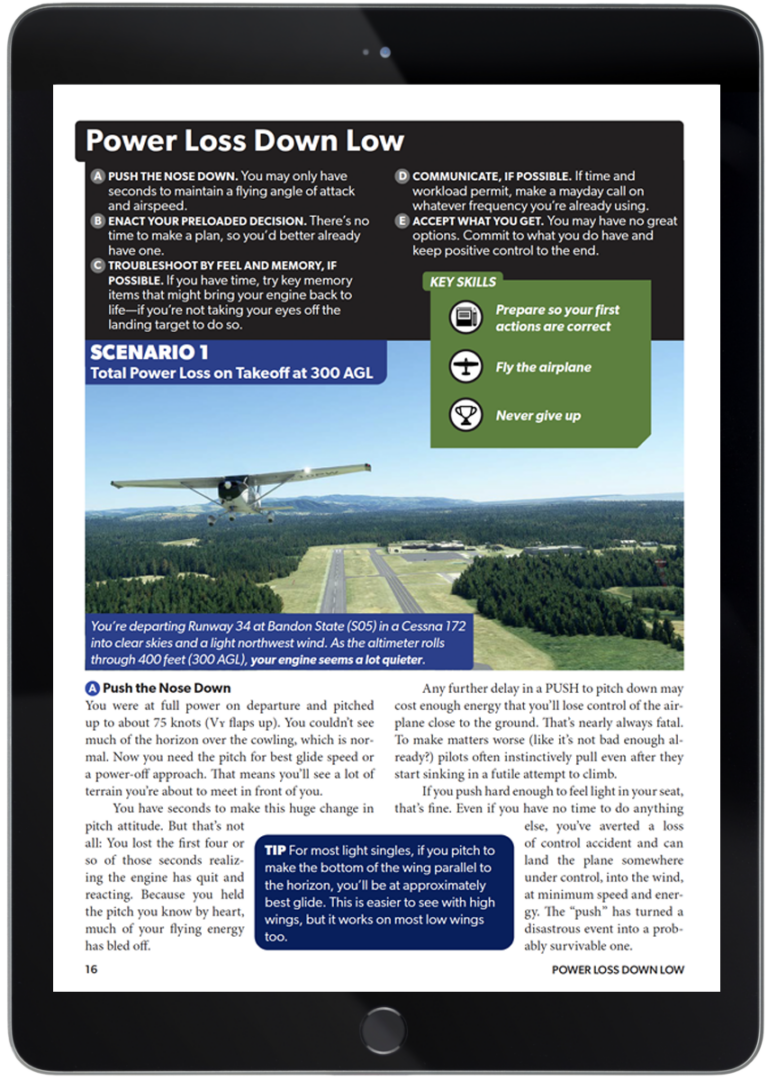
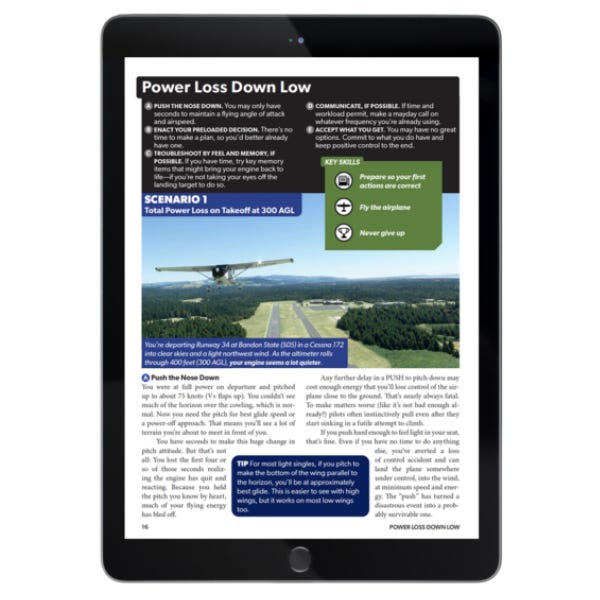
The manual is visually engaging, and structured to build a new way of thinking about emergencies. For each kind of emergency, you’ll learn the action steps to take and the key skills required. Tips and sidebars will expand your knowledge even further.
Example scenarios let you experience different kinds of emergencies. You’ll deepen your understanding of each strategy and the best steps to take. You’ll see similarities that will make variations in the real world easier to handle. By thinking through the example scenarios, you’ll be better prepared to manage your emergency situation to the safest possible outcome.
This manual is not just a rehash of what you’ll find in your POH. It’s meant to supplement the POH and what you already know. You’ll build a framework in which your existing emergency procedures can be even more effective—and the manual provides a template to help you do this. You’ll be better prepared to handle the emergencies you’ve already trained for—as well as ones you’ve never even thought about before.
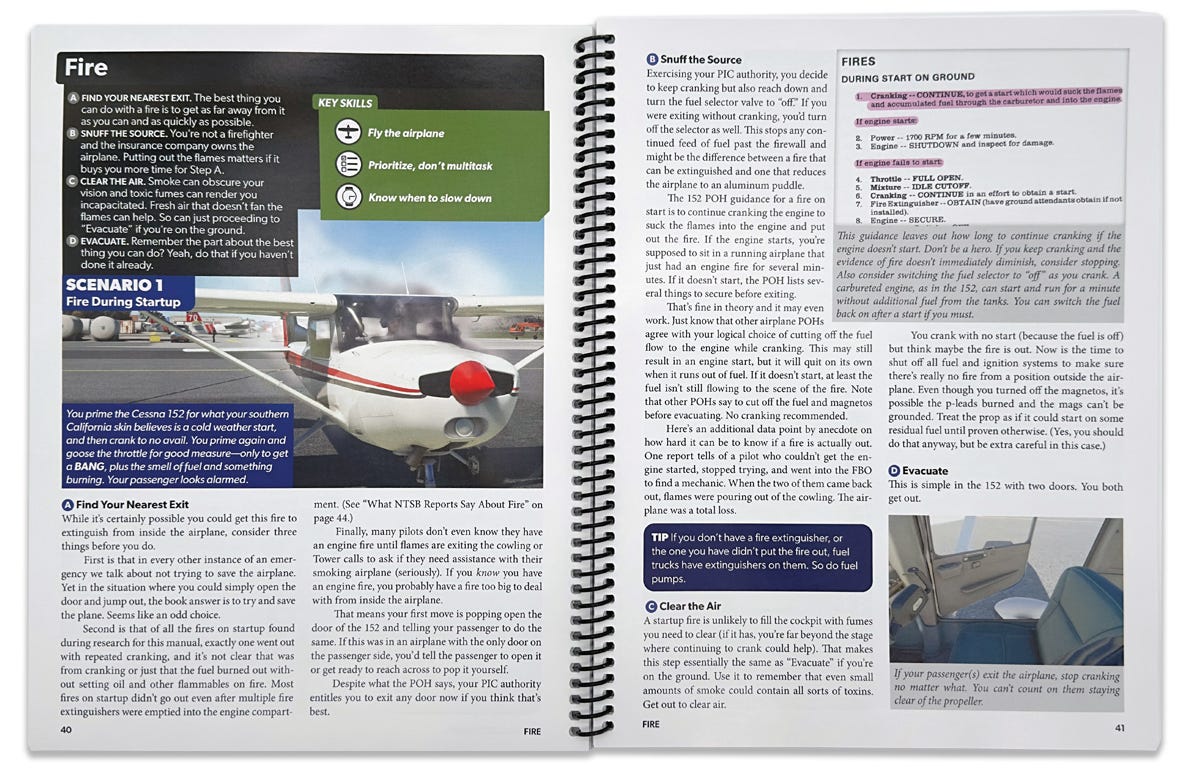
Check out a sample chapter from the manual
Covers the critical details of managing emergencies
- Power loss down low: total power loss, partial power loss, detecting engine problems, troubleshooting by feel, practicing the push and turnback
- Power loss up high: understanding carb heat, using your EFB to play the "what if" game, configuring for best-glide speed, practice scenarios on every flight
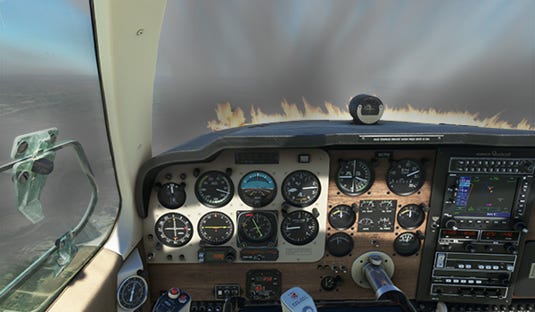
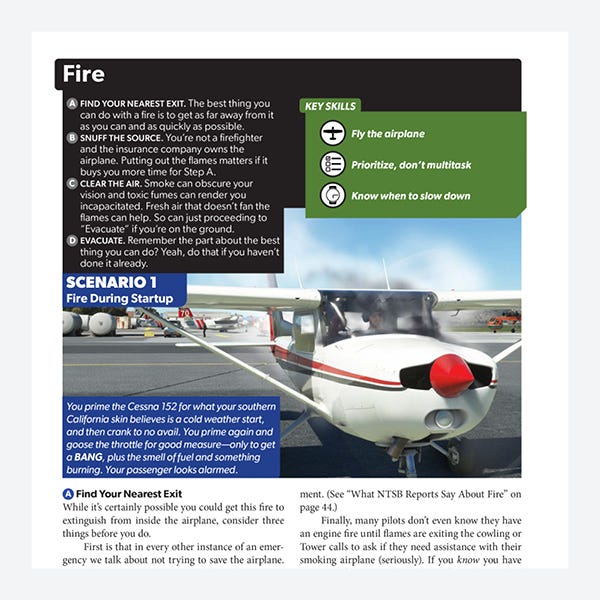
- Fire: engine starting fires, preventing brake fires, safely making a rapid descent, how to evacuate the airplane, properly using a fire extinguisher
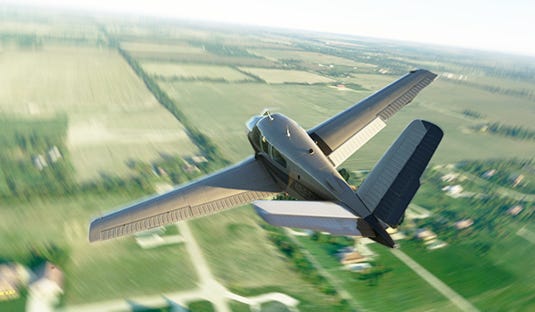
- Flight upsets: reacting to wake turbulence, recovering from a graveyard spiral, why it's so important to push, avoiding go-around stalls, preventing overspeeding
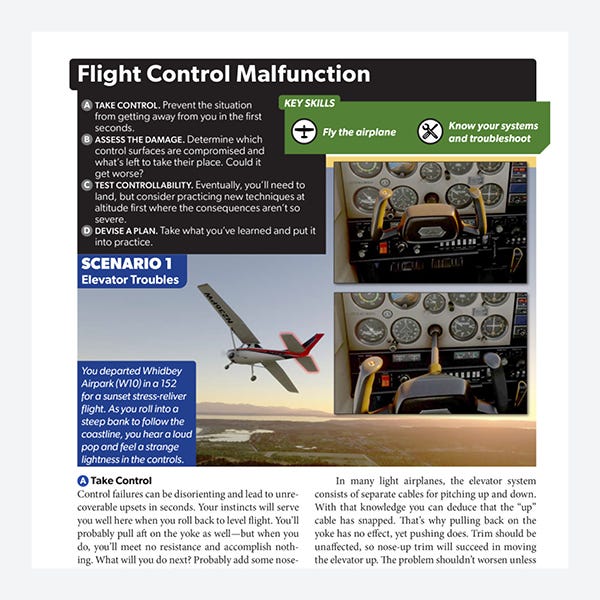
- Flight control malfunction: handling elevator troubles, using trim, managing split flaps, how to carefully test controllability, using a simulator to practice
- Non-powerplant systems failure: avoiding confusion after an instrument failure, build a habit of downgrading to a lower level of automation, using "triangles of agreement"
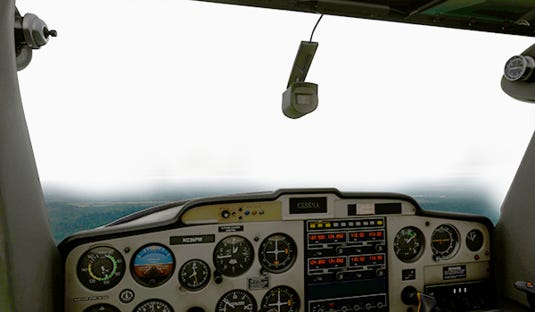
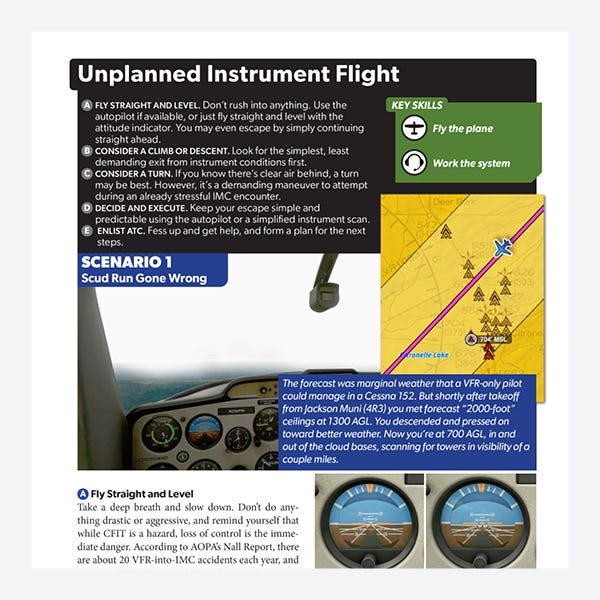
- Unplanned instrument flight: quickly and safely transition to instrument flight, focus on flying straight and level, proper use of autopilots, communicating with ATC, building a solid emergency scan, using "objective decision points"
- Pilot or passenger impairment: mitigating passenger stress, how to interpret CO detector readings, staying hydrated in flight, enlisting ATC to get you help
- Dangerous distractions: distinguish between a distraction and an emergency, dealing with an open door in flight, packing wisely in case your heater fails, using map layers to alleviate distractions near busy Class B airspace
- Landing complication: using the autopilot to help, prevent embarassing gear-up landings, briefing passengers for an abnormal landing, create your own landing checklist, practice no-brake landings to prepare
- Unavoidable crash: use your radio and ELT to get help rolling before you crash, load the cabin to prevent potential injuries, brief your passengers what to do after the crash, ditching tips, how to get protection from seatbelts
Includes Print and Digital Manual
The digital version is available on Sporty’s Pilot Training platform, so you can read it online or on your tablet—alongside all your Sporty’s courses. Powerful reading tools are included, like highlighting, search, and bookmarks. Or download the PDF for easy reading on all your devices, with or without an internet connection.
The print version is ideal for detailed reading or quick reference. Printed in full color on high-quality, durable paper and presented in a 8.5” x 11” spiral-bound format. You might even leave the book in your flight bag!
Digital (PDF)
- Quick and easy download
- Instantly available in Sporty's Pilot Training App
- Looks great on iPad

Printed Manual
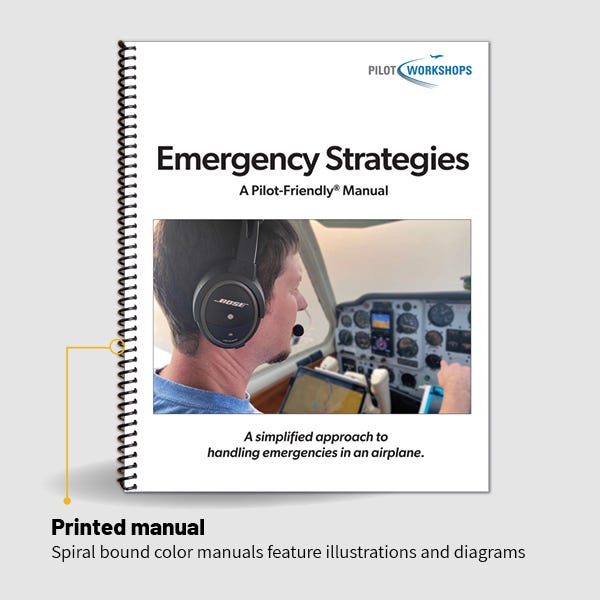
- Spiral bound 8.5” x 11” full color manual
- All the same features of the PDF
- Free shipping
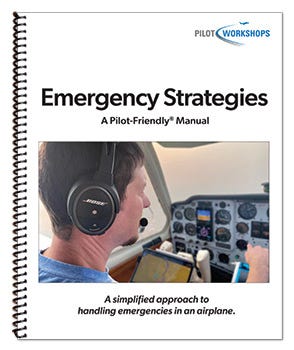
A simplified approach to handling emergencies in an airplane
Both formats for one price
Features

Scenario-based format with action steps and key skills

Digital manual looks great on an iPad; keep it in your EFB app for easy access

129 pages - Fully illustrated with color photos and graphics

Spiral-bound printed manual for easy use in the cockpit

Clear explanations, real-world examples, and pro tips
Learn to think better when it matters most
Hoping that an emergency doesn’t happen to you isn’t a strategy. The team at PilotWorkshops created this book to show you just how much control you actually have.
Facing an actual in-flight emergency can be surreal. Sometimes pilots don’t hesitate and immediately fall back on their training. But often, gripped by fear, they’re reluctant to admit that an emergency is actually happening. Instead of addressing the situation, they waste precious time watching it unfold. What’s needed is a way for pilots to mentally practice and build a flexible response to any emergency.
Most books about handling in-flight emergencies focus on procedures. This book is different. In this manual, Pilot Workshops groups the nearly infinite number of emergency situations into 11 general categories, and presents strategies you can use to handle those kinds of emergencies. The goal is to help you build a framework to address each kind of emergency more effectively.
This approach works because successfully resolving an emergency is a process you work through, not purely an exercise in memory recall and action. Memory items, flow patterns and checklists are only parts of the puzzle. You’ll learn the most effective mindset for approaching each type of emergency, no matter what specific actions you need to take (given the airplane you’re flying, your experience, and the exact situation you find yourself in).
A new way to hone your emergency skills
The manual is visually engaging, and structured to build a new way of thinking about emergencies. For each kind of emergency, you’ll learn the action steps to take and the key skills required. Tips and sidebars will expand your knowledge even further.
Example scenarios let you experience different kinds of emergencies. You’ll deepen your understanding of each strategy and the best steps to take. You’ll see similarities that will make variations in the real world easier to handle. By thinking through the example scenarios, you’ll be better prepared to manage your emergency situation to the safest possible outcome.
This manual is not just a rehash of what you’ll find in your POH. It’s meant to supplement the POH and what you already know. You’ll build a framework in which your existing emergency procedures can be even more effective—and the manual provides a template to help you do this. You’ll be better prepared to handle the emergencies you’ve already trained for—as well as ones you’ve never even thought about before.
Covers the Critical Details of Managing Emergencies
Power loss at low altitude is a nightmare scenario for pilots, and the subject of much debate. We look at a total power loss, as well as the often overlooked (but still deadly) partial loss of power.
Learn how to:
- Preload your decision in the event of a power loss (using your EFB and a takeoff briefing)
- Detect engine problems early to avoid losing valuable seconds when they count most
- Troubleshoot by feel and memory—or don’t (we tell you when to do each)
- Use the rule of 10° to keep your maneuvering within safe limits
- Make a rolling series of commitments to get an airplane with partial power back on the ground safely
- Properly practice the Push and the Turnback (at altitude)
- Avoid common (and deadly) mistakes when committing to an off-field landing
- Prevent some airborne power losses entirely by using a mnemonic on the takeoff roll

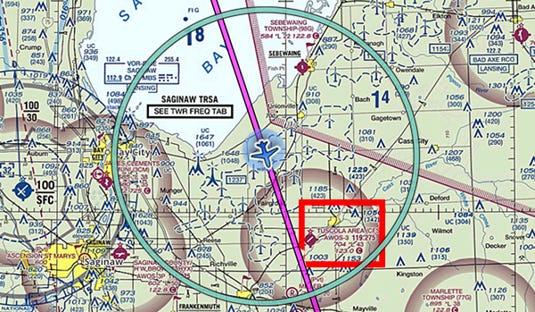
When you lose power in cruise, the good news is you have time. But what should you do with that time? One flexible strategy can cover a complete power loss, a smooth power drop, and surging RPM.
Learn how to:
- Back up your flow with checklists and amplified procedures
- Better understand the effects of using carb heat
- Use your EFB to continuously play a “what if” game as you fly
- Quickly configure your airplane to give you best-glide speed
- Maintain aircraft control while you troubleshoot the problem
- Get a reality check when the engine seems to be running roughly
- Maximize your time aloft if you’re right over a potential landing site
- Make short-range goals and maintain a hopscotch mentality
- Practice different engine-out landing scenarios on every flight
When you lose power in cruise, the good news is you have time. But what should you do with that time? One flexible strategy can cover a complete power loss, a smooth power drop, and surging RPM.
Learn how to:
- Decide when it’s safe to keep cranking with a startup fire and when it’s not
- Reduce the risk of having a brake fire
- React if you smell smoke on the takeoff roll
- Tell the difference between burning oil, hydraulic fluid, plastics—and a fuel fire
- Put out the flames, and clear the air of smoke and toxic fumes
- Safely make a rapid emergency descent
- Evacuate the airplane (and what to do after that)
- Upgrade your aircraft interior with fire-retardant materials
- Practice the fire procedures for your airplane
- Properly use a fire extinguisher and smoke hood
When you lose power in cruise, the good news is you have time. But what should you do with that time? One flexible strategy can cover a complete power loss, a smooth power drop, and surging RPM.
Learn how to:
- Retrain your instincts to avoid overspeeding or overstressing the airframe
- Effectively practice spiral dive recovery in an airplane or a simulator
- Neutralize and push to unload the wings and reduce load factor (even though it feels counterintuitive)
- Use all your senses to detect and avoid flight upsets
- Determine whether you’re in a spin or a steep spiral (and why knowing matters)
- Avoid go around stalls and base-to-final spins, and practice recovering from them safely
- Avoid the common mistakes that lead to wake turbulence upsets
- Give yourself the best chance to survive an inadvertent thunderstorm encounter
- Root your upset recovery skills in real-world sights and sensations

Control failures can be disorienting and can quickly lead to unrecoverable upsets. We use elevator troubles, split flaps, and a broken throttle to explore the actions and attitudes you’ll need to survive.
Learn how to:
- Prevent the situation from getting away from you in the first few seconds—and maintain control
- Assess the damage by trying again, or by undoing the last thing you did
- Carefully test controllability, come up with creative work-arounds, and practice them at altitude
- Quickly recognize and recover from runaway trim
- Use your trim (and a test pilot attitude) to deal with a jammed elevator
- Prepare your cockpit—and your passengers—to ensure the flight controls can always move freely
- Use a simulator to practice recognizing and dealing with unexpected flight control malfunctions
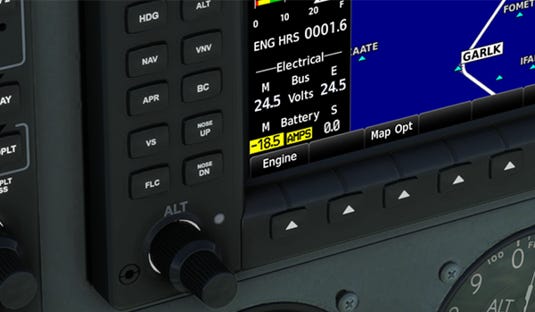
Engine failures are always a big deal. But when it comes to failures of other systems, context is everything. There’s a big difference between an alternator failure at night in VMC, a PFD airspeed failure in IMC, and a misbehaving autopilot in haze. We explore these three situations to show the difference.
Learn how to:
- Keep flying and allocate enough time to make a correct diagnosis
- Avoid confusion and disorientation in the seconds immediately following an instrument failure
- Build a habit of downgrading to a lower level of automation before disconnecting the autopilot when it’s misbehaving
- Assess the situation and get the most from the systems (and time) you still have available
- Plan for what’s likely, but be prepared for the worst
- Use “triangles of agreement” to validate that the problem is what you think it is
- Use your performance profiles to make an instrument failure feel less like an emergency
Engine failures are always a big deal. But when it comes to failures of other systems, context is everything. There’s a big difference between an alternator failure at night in VMC, a PFD airspeed failure in IMC, and a misbehaving autopilot in haze. We explore these three situations to show the difference.
Learn how to:
- Quickly and safely transition to instrument flight (mechanical or glass)
- Fly straight and level by hand in IMC without overcontrolling
- Use an autopilot to maintain control (and how to choose—and verify—the most appropriate lateral and vertical modes)
- Decide if climbing, descending, or turning makes sense
- Make your escape simple and predictable using the autopilot or a simplified instrument scan
- Let ATC help you find the nearest VFR or MFVR conditions while avoiding terrain and obstacles (or guide you all the way to the ground in IMC)
- Build a solid emergency scan using the basic control-performance loop
- Use “objective decision points” to resist the urge to press on when the weather is marginal
- Mitigate the risks of VFR flight on a clear, moonless night
Whether it’s you or a passenger with a sudden medical problem, your job as PIC is to limit the issue, divert for landing, and keep your cool along the way. We look at airsickness, choking, and carbon monoxide poisoning.
Learn how to:
- Enlist ATC to get you the help you need in the air and on the ground
- Mitigate passenger stress—and your stress—with your intercom and radio
- Interpret readings from a CO detector, and what to know when they get too high
- Help a passenger avoid airsickness, and offer relief once it starts
- Remove the siren song of flying “just a bit farther” to see if an issue resolves
- Pack snacks and drinks that will keep you hydrated without requiring additional stops
- Keep your cool during decent and landing by setting “targets”
- Create a simple tool for passengers that could save the day if you’re suddenly incapacitated
- Find the lowest altitude where you should consider supplemental oxygen, using an inexpensive pulse oximeter

An open door in flight or a heater failure in the cold may not be an emergency—unless you make it one. We explore ways to prevent these and other distractions from becoming more serious issues.
Learn how to:
- Distinguish between a distraction that you can ignore (for now) and an emergency
- Mitigate a distraction’s disruption to your normal flow of tasks
- Eliminate wind noise on the intercom if a door pops open in flight
- Deal with an open door during an IFR departure in IMC
- Make sure your checklists aren’t a distraction that cause more problems than they solve
- Pack wisely for a high-altitude or winter flight to buy some time if your heater fails
- Decide whether to continue the flight as planned, or divert and make a new plan
- Avoid letting an honest mistake turn into a dangerous distraction
- Use map layers to alleviate distractions when navigating near busy Class B airspace

- Enlist ATC and the autopilot to help address the problem
- Mitigate a problem’s negative effect if you aren’t able to correct it
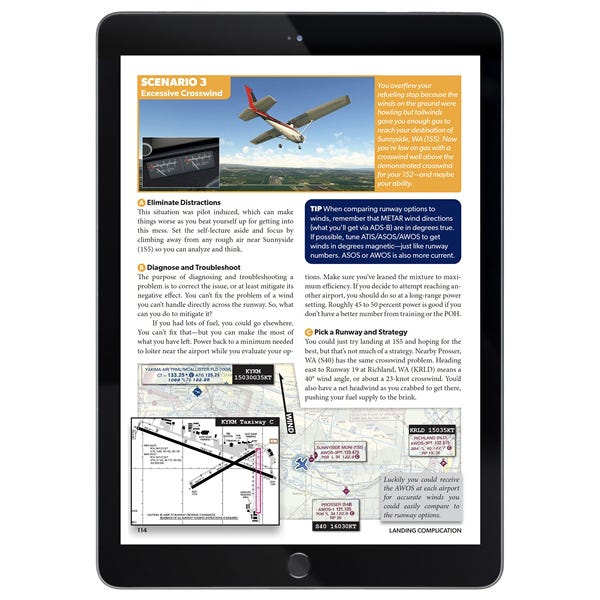
- Minimize your odds of making an embarrassing, expensive gear-up landing
- Decide whether to land on two wheels or none when the third wheel won’t extend
- Set your passengers’ minds at ease while briefing them for an abnormal landing
- Think outside the box as you pick a runway and a strategy for a very strong crosswind
- Create your own Landing Checklist that you’ll easily see and use
- Practice no-brake landings to prepare for a real brake failure someday
- Keep control if you discover a landing complication right after touchdown

Once you accept that an off-airport “landing” is inevitable, you have some work to do—quickly. Flying into the trees, crashing in an urban jungle, or ditching in the water is rarely pretty. But there’s plenty you can do to improve your odds of surviving.
Learn how to:
- Use your radio, transponder, and ELT to get help rolling before you crash
- Load the cabin before departure in a way that minimizes potential injuries
- Have access to the things you’ll need the most after a crash
- Brief your passengers on what to do after the crash (especially if you didn’t brief them before takeoff)
- Minimize the forces that cause the most injuries during a crash
- Pick the best trees to crash into
- Increase the likelihood you’ll survive a crash onto a highway, a road, or into a parking lot
- Ditch so you’ll maximize your chances of escaping … and being rescued
- Get the most protection from seatbelts, and learn when to unbuckle them after crashing (or when to do something else first)
- Create a simple survival kit and learn why you should take a survival course


Frequently asked questions
The tasks covered are applicable to most conventional piston aircraft engines. Where necessary, some tasks will provide model specific instructions (i.e. Lycoming, Continental, Rotax) or type specific instructions (i.e. high-performance, turbocharged, fuel injected, etc.) if they are different.
The digital manual is delivered in PDF format and works on any computer or mobile device.
Yes, the digital PDF is formatted for use on your iPad and can be downloaded in a few easy steps.
The printed manual is 8.5 x 11 inches, so it will fit in most flight bags or in the seat pocket of your airplane. It’s printed on high quality, durable paper. We take the extra step of adding a spiral binder so it’s easier to open and use in the cockpit, and we top it with a clear plastic cover to protect it from weather and spills.
We use the US Postal Service to mail all USA orders, and they typically arrive within 5 business days. International orders usually arrive within 10 business days (can be longer in some countries). If you order the printed manual, you’ll also get the digital version, which you can download and start using right away.
Reviews
Questions & Answers
What we offer




- Price:
- Actual Price: