IFR Procedures Manual Bundle (PilotWorkshops)
Free Shipping!

In stock
Backordered
The majority of instrument rated GA pilots struggle to maintain IFR proficiency. It’s a real problem, and something PilotWorkshops has seen repeatedly over the past 17 years providing IFR training. Even pilots that maintain the required IFR currency may still have gaps in their IFR knowledge that put them at risk. That’s where IFR Procedures comes in.
Features:
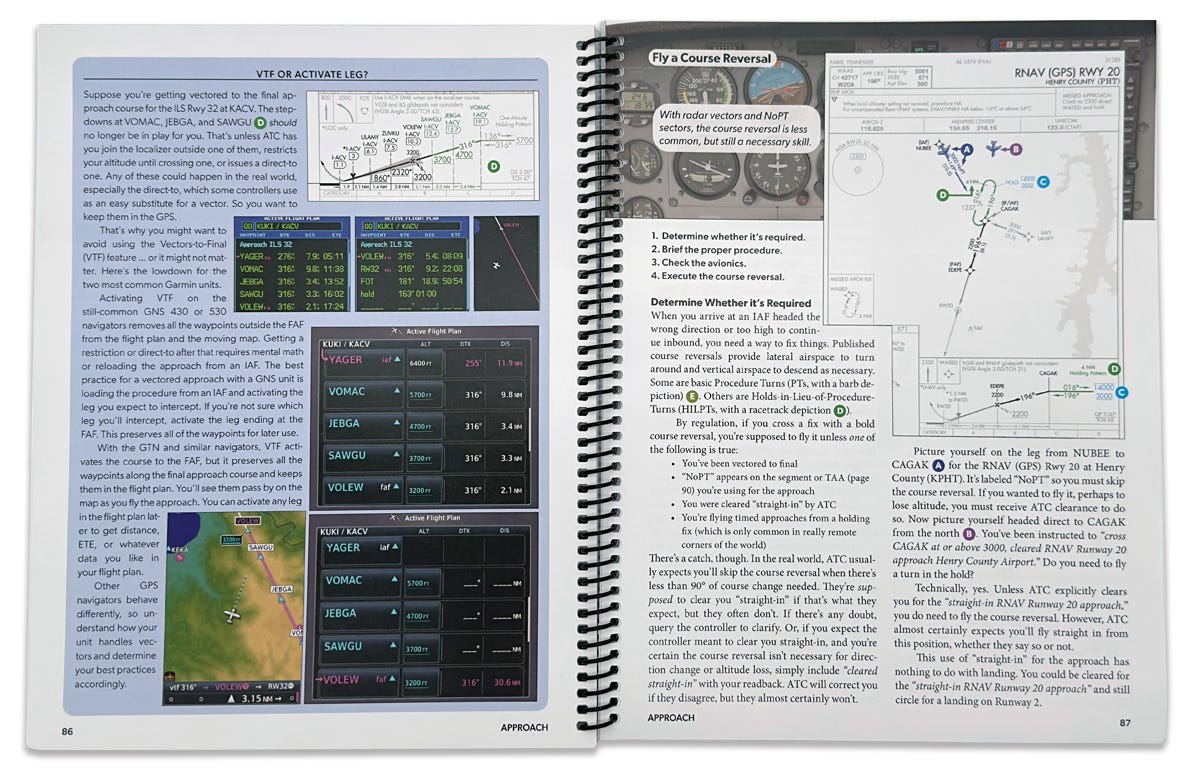
- 144 pages—fully illustrated with color photos, charts and graphics
- Task-oriented format with step-by-step instructions
- Clear explanations, real world examples and pro tips
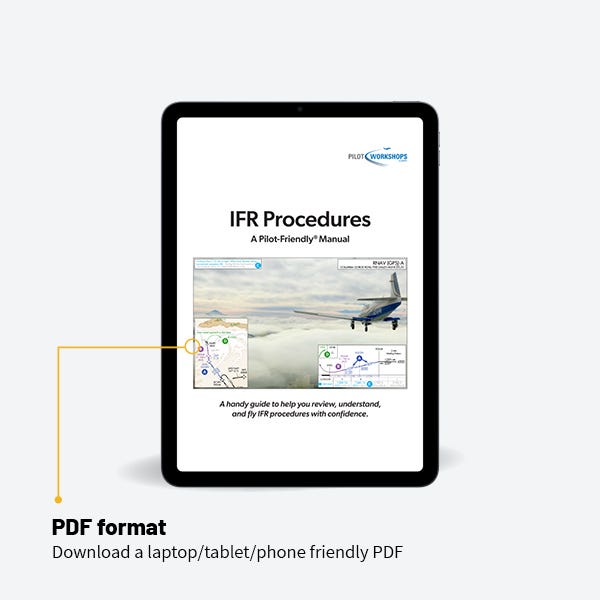
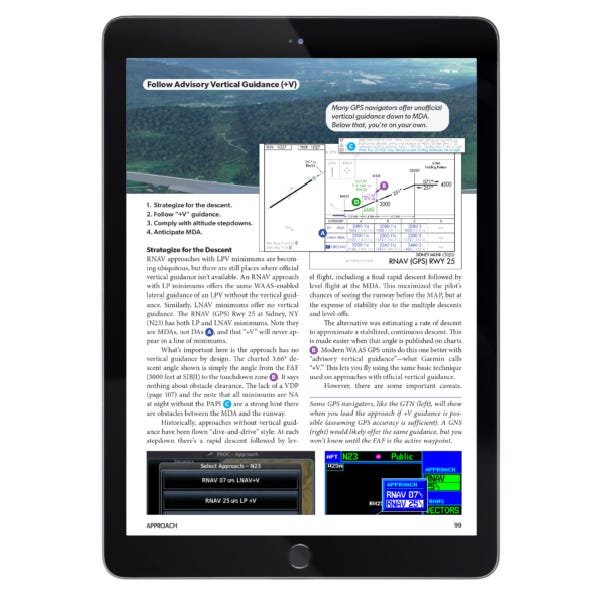
- Digital manual looks great on an iPad; keep it in your EFB app for quick access
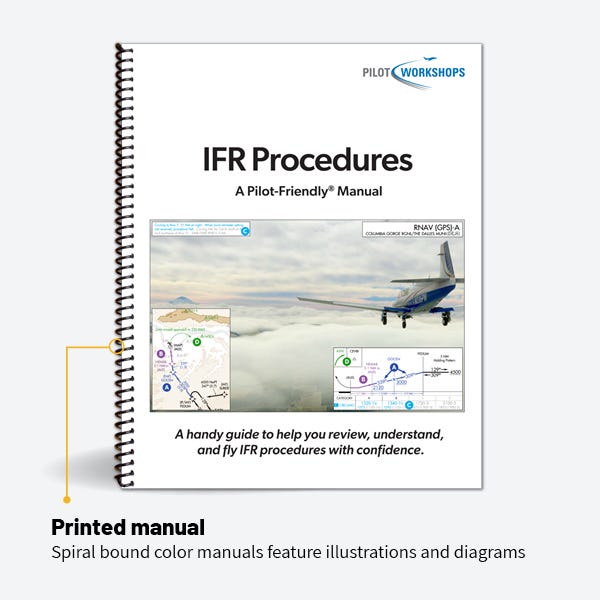
- Spiral-bound printed manual for easy use in the cockpit
The goal was to create a tool pilots can use to improve their IFR knowledge as needed. It is useful for a wide range of IFR pilots, whether they are rusty and need an IPC, or fly IFR regularly but need to brush up on a procedure they haven’t done in a while. The manual breaks each IFR procedure down into individual tasks, and explains in detail how to complete each one.
This step by step approach works well because it leverages the structure and consistency of the IFR system. For example, ILS and LPV approaches are flown in similar ways. By breaking them down into individual steps and explaining each one, you can see the similarities and differences between them. This holds true to many other aspects of IFR flying. By explaining each step and laying them out in sequence, it’s easier to understand how each one fits into a procedure, and how each procedure fits into the IFR system as a whole.
The manual addresses things that trip pilots up, and offers useful tips and real world examples to address them. It’s organized by phase of flight, includes a quick-search table of contents, and covers beginner through advanced procedures (see the complete list below).
This manual is not intended to teach IFR basics and is not a substitute for IFR ground school. But for pilots with an instrument rating (or those working on one) it’s a handy tool to refresh and deepen your understanding of the IFR system.
Topics covered include:
- Clearances: towered airport, non-towered, pop-up
- Departures: ODPs, visual climbs, flying a SID
- En route: choosing an altitude, block altitudes, VFR on top
- Arrivals: descent planning, flying STARs, choosing an approach
- Approaches: visual and contact approaches, vectors, glide paths, circling to land, missed approaches
- Unusual cases: cruise clearance, practice approaches, ASR/PAR approaches
- Post flight: canceling an IFR flight plan
Comes with both formats
This manual is available on Sporty’s Pilot Training platform, so you can read the digital version online or on your tablet—alongside all your Sporty’s courses. Powerful reading tools are included, like highlighting, search, and bookmarks. Or download the PDF for easy reading on all your devices, with or without an internet connection. You might even leave the 8.5” x 11” spiral-bound book in your flight bag!
Digital (PDF)
- Quick and easy download
- Instantly available in Sporty's Pilot Training App
- Looks great on iPad

Printed Manual
Spiral-bound 8.5” x 11” full-color manual
- All the same features of the PDF
- Free shipping

A handy guide to help you review, understand, and fly IFR procedures with confidence.
The majority of instrument rated GA pilots struggle to maintain IFR proficiency. It’s a real problem, and something PilotWorkshops has seen repeatedly over the past 17 years providing IFR training. Even pilots that maintain the required IFR currency may still have gaps in their IFR knowledge that put them at risk. That’s where IFR Procedures come in
Both formats for one price
Features

Task-oriented format with step-by-step instructions

Digital manual looks great on an iPad; keep it in your EFB app for quick access

144 pages - Fully illustrated with color photos, charts and graphics

Spiral-bound printed manual for easy use in the cockpit

Clear explanations, real world examples and pro tips
Simplifies IFR Flying — Step By Step
The majority of instrument rated GA pilots struggle to maintain IFR proficiency. It’s a real problem, and something we’ve seen repeatedly over the past 17 years providing IFR training. Even pilots that maintain the required IFR currency may still have gaps in their IFR knowledge that put them at risk. That’s where this manual comes in.
Our goal was to create a tool pilots can use to improve their IFR knowledge. We wanted it to be useful for a wide range of IFR pilots; whether they are rusty and need an IPC, or fly IFR regularly but need to brush up on a procedure they haven’t done in a while. The manual breaks each IFR procedure down into individual tasks, and explains in detail how to complete each one.
This step-by-step approach works well because it leverages the structure and consistency of the IFR system. For example, ILS and LPV approaches are flown in similar ways. By breaking them down into individual steps and explaining each one, we can easily show you the similarities and differences between them. This holds true to many other aspects of IFR flying. By explaining each step and laying them out in sequence, it’s easier to understand how each one fits into a procedure, and how each procedure fits into the IFR system as a whole.
The manual addresses things that trip pilots up, and offers useful tips and real world examples to address them. It’s organized by phase of flight, includes a quick-search table of contents, and covers beginner through advanced procedures (see the complete list below).
This manual is not intended to teach IFR basics and is not a substitute for IFR ground school.. But for pilots with an instrument rating (or those working on one) it’s a handy tool to refresh and deepen your understanding of the IFR system.
Covers The Essential Details In Each IFR Procedure
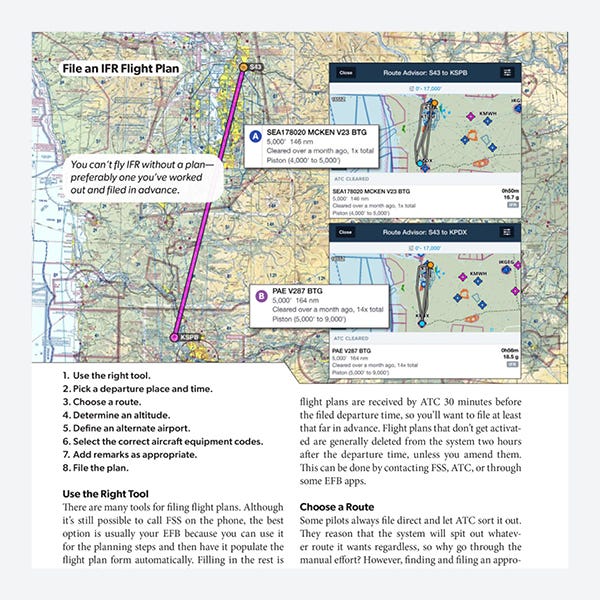
- Filing an IFR flight plan
- Obtaining a clearance at a towered airport
- Obtaining a clearance at a non-towered airport
- Obtaining a clearance airborne after departure
- Departing VFR on an IFR clearance
- Picking up a filed clearance enroute
- Obtaining a “Pop-up” IFR clearance
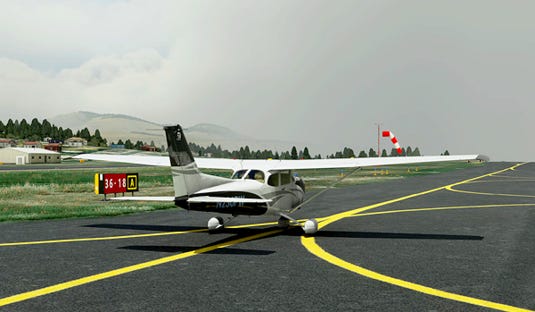
- Departing an airport without IFR procedures
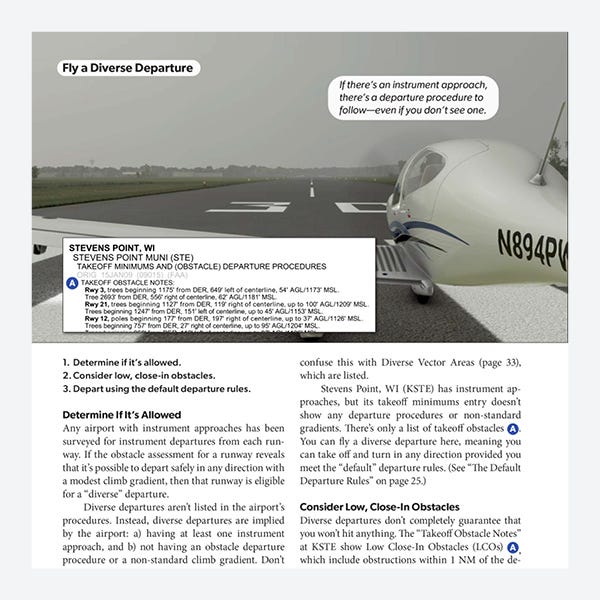
- Flying a diverse departure
- Flying a textual ODP
- Flying a graphical ODP
- Getting vectors after takeoff
- Using a Visual Climb Over the Airport (VCOA)
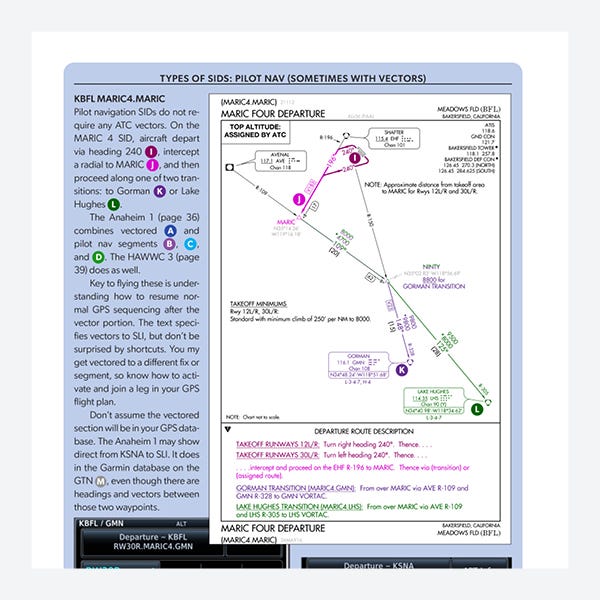
- Flying a SID
- Departing IFR for a climb to VFR-on-Top

- Navigating enroute
- Picking a safe cruise altitude
- Surviving an unexpected hold
- Employing a VFR-on-Top clearance
- Requesting a block altitude

- Planning and execute a descent
- Executing a descent with VNAV
- Flying a STAR
- Choosing an approach
- Selecting the appropriate minimums
- Setting up for the approach

- Flying a visual approach
- Flying a charted visual approach
- Using a contact approach
- Getting vectors to final
- Flying a course reversal
- Navigating an arc or RF leg
- Using a Terminal Arrival Area (TAA)
- Following a glidepath/glideslope
- Descending with advisory vertical guidance
- Descending without vertical guidance
- Deciding to continue or miss
- Using a Visual Descent Point
- Landing straight in
- Circling to land
- Executing a published missed approach
- Executing a missed approach from a circle
- Executing an alternate missed approach
- Executing a “missed” from below DA/MDA

- Returning to the departure airport (or a nearby airport)
- Flying a dead reckoning segment
- Using a Cruise Clearance
- Using a Through Clearance
- Requesting an approach at one airport to land at another
- Using a “Fly Visual” segment
- Flying practice approaches under VFR
- Flying an ASR/PAR approach

- Canceling IFR in flight
- Canceling IFR on the ground


Frequently asked questions
The digital manual is delivered in PDF format and works on any computer or mobile device.
Yes, the digital PDF is formatted for use on your iPad and can be downloaded in a few easy steps.
The printed manual is 8.5 x 11 inches, so it will fit in most flight bags or in the seat pocket of your airplane. It’s printed on high quality, durable paper. We take the extra step of adding a spiral binder so it’s easier to open and use in the cockpit, and we top it with a clear plastic cover to protect it from weather and spills.
We use the US Postal Service to mail all USA orders, and they typically arrive within 5 business days. International orders usually arrive within 10 business days (can be longer in some countries). If you order the printed manual, you’ll also get the digital version, which you can download and start using right away.
Reviews
Questions & Answers
What we offer




- Price:
- Actual Price: