
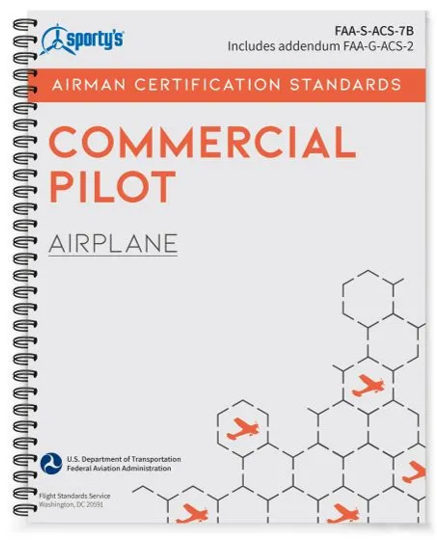
 Many commercial pilot applicants don't open the Commercial Airman Certification Standards (ACS) until they're a few weeks away from the checkride. That's a mistake. The Commercial ACS isn't just a testing document—it's the roadmap your instructor should be using, and the playbook your examiner will be using during your checkride.
View this ACS entry for the normal takeoff and climb.
Think of the ACS as your training guide. It outlines not only the flight maneuvers you'll be expected to perform, but also the aeronautical knowledge, risk management, and decision-making skills you'll need to demonstrate. If you know what's expected from the beginning, you'll train with much more purpose and confidence.
As you progress through your lessons, take a few minutes to review the ACS before and after each flight. Ask yourself, "What tasks did I work on today?" and "What knowledge or risk management elements did my instructor emphasize?" You'll quickly see that every lesson ties back to the standards in some way.
From an instructor's perspective, one of the biggest mistakes students make is treating the ACS like a cram guide instead of a training companion. By the time your checkride is scheduled, the ACS shouldn't feel like a new document—it should feel familiar.
If you're using a structured training program, such as Sporty's Commercial Pilot Course, you'll notice the lessons are designed around the same ACS standards you'll be evaluated on during your practical test. That makes it easy to connect each lesson with the skills and knowledge your examiner will be looking for.
The Commercial ACS isn't just about passing a checkride. Used correctly, it's one of the best tools for becoming a knowledgeable, proficient, and safe commercial pilot.