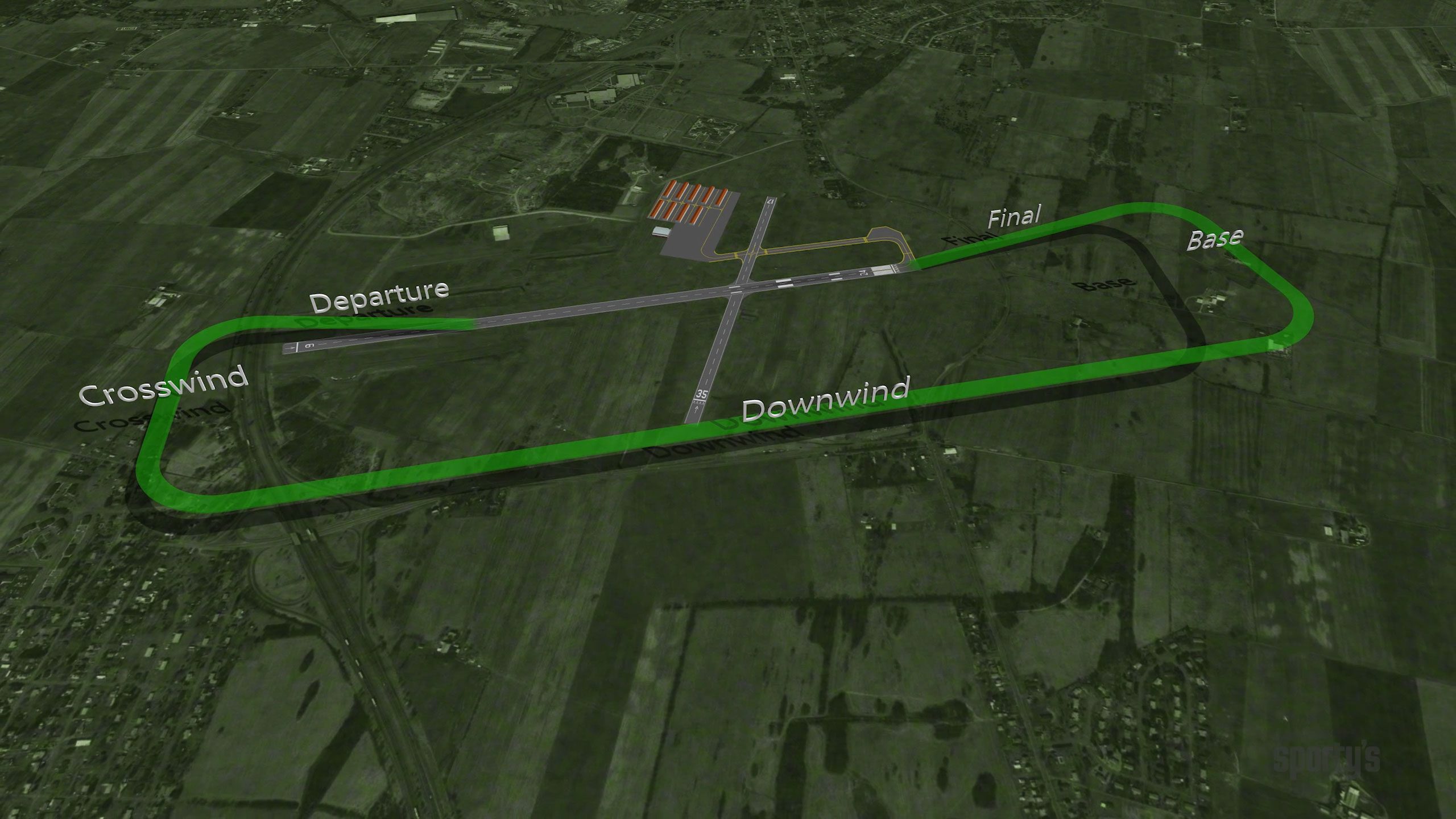
 At our home airport at Sporty's, the traffic pattern stays busy—especially with our flight school airplanes. It’s common to have multiple airplanes in the pattern, a steady stream of radio calls, and a lot happening in a short amount of time. For many student pilots, that’s where things start to feel overwhelming.
The truth is, the problem usually isn’t doing too much—it’s thinking about the wrong things at the wrong time. A good pattern comes down to just a few priorities.
First is spacing. Where are you relative to other traffic, and how will that affect your approach? This drives everything else. If your spacing isn’t right, you’ll spend the rest of the pattern trying to fix it.
Next is energy management—your airspeed and altitude. Are you high or low? Fast or slow? Most landing problems start here on downwind or base, not in the flare.
Finally, think about configuration and timing. When should the flaps come in? When should you slow down? These should happen at consistent points, not rushed or delayed.
One of the biggest shifts students make is moving from reacting to anticipating. Instead of waiting to see what happens on base or final, you should already have a picture of how the approach will look.
From an instructor’s perspective, we’re watching how you manage the pattern. Are you thinking ahead and making small corrections early, or constantly trying to catch up?
If the pattern feels overwhelming, simplify it by focusing on these priorities. Stay ahead of the airplane, and the good landings will follow.