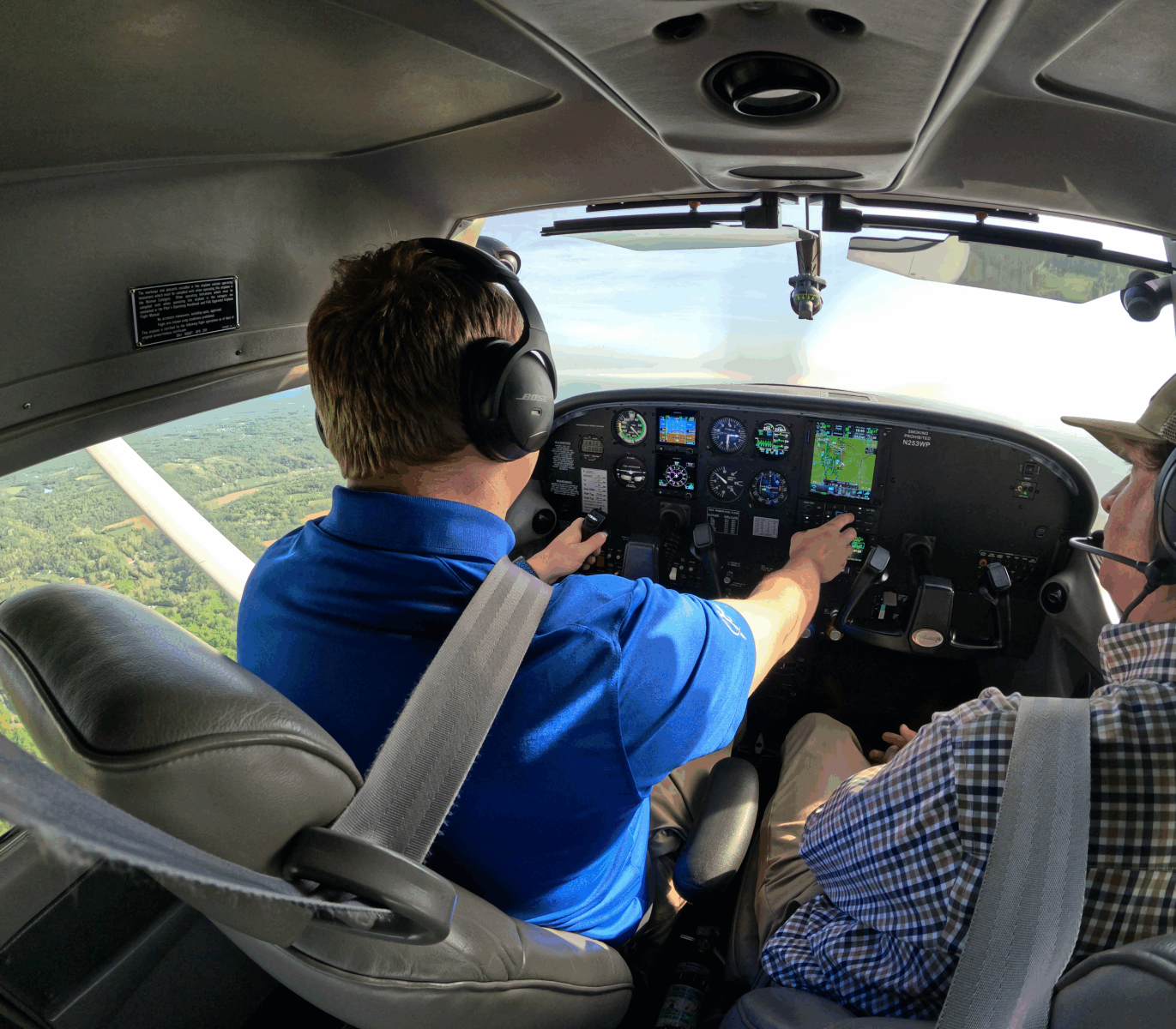
 Many pilots dream of bringing their pet along on a flight. A dog in the right seat can make a great flying buddy, but before you load up and head out, there are a few things to consider.
At our flight school, we see plenty of pilots who love sharing aviation with their families—including their dogs. The pilots who are most successful treat their dog like any other passenger: they plan ahead, introduce them gradually, and make sure they’re comfortable in the airplane.
Start small. Don’t make your dog’s first flight a long cross-country adventure. Spend some time around the airplane on the ground first, then gradually introduce them to the sounds and sensations of flying. A short local flight is a much better way to learn how your dog will react.
Have a plan B. Some dogs take to flying immediately, while others may experience anxiety, motion sickness, or simply decide that aviation isn’t for them. That’s okay. A responsible pilot recognizes when a passenger isn’t comfortable and makes the right decision—even if that means your dog stays on the ground.
Safety also means keeping your dog secure. A loose dog in the cockpit can become a distraction or even interfere with the controls. Plan ahead for where your dog will sit and how they’ll be restrained during the flight, just like you would for any other passenger.
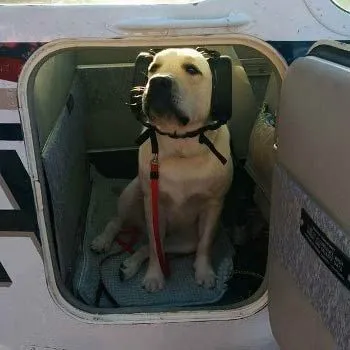
Finally, consider the noise environment. General aviation airplanes can be loud, and your dog can’t tell you when the sound level becomes uncomfortable. Protecting their hearing is a reasonable precaution, especially on longer flights or in louder airplanes. Aviation-specific hearing protection, like the 4Paws Aviation Dog Ear Muffs available from Sporty’s, is designed to reduce noise exposure while keeping your dog comfortable during flight.
Take the time to introduce your dog to flying gradually, pay attention to their reactions, and remember that not every dog has to become a flying dog.