Most pilots have heard the advice: oxygen isn’t just for cruising above 12,500 feet per FAR 91.211. Night vision begins to degrade as low as 5,000 feet, and cruising at 8,000 or 10,000 feet for hours leaves you with subtle fatigue, a mild headache, and slower reaction times. Yet, despite knowing we should clip on a cannula on almost every cross-country leg, most of us never buy an oxygen bottle. Even if we do, we leave it in the hangar most of the time.
Why? Traditional aviator oxygen systems are very effective, but they can be a hassle to use. Heavy tanks take up valuable useful load, securing them in the cabin is a chore, and the fear of running out mid-trip leads to constant "oxygen rationing."
That’s why I was interested in testing the Inogen Rove 6 recently, a portable oxygen concentrator that operates in a completely different way than a traditional oxygen tank. Does it work in the cockpit of a GA airplane? I took it flying to find out.
How It Works: Infinite Oxygen on Board
Unlike traditional systems that store compressed gas in a heavy cylinder, an oxygen concentrator takes ambient cabin air, filters out the nitrogen using internal molecular sieve beds, and delivers concentrated, pulse-dose oxygen straight to your cannula. The beauty of this design is simple: it never runs out of oxygen. As long as the unit has battery power—or is plugged into your aircraft’s 12V/24V cigarette lighter—it produces medical-grade oxygen endlessly.
Because you’re no longer staring at a pressure gauge watching your supply dwindle, your mindset shifts immediately. You start turning oxygen on at 6,000 feet just to stay sharp. You arrive at your destination feeling refreshed rather than beat up by a long day in the cockpit. That change in behavior is a massive safety boost.
Flight Test: Turn On and Fly
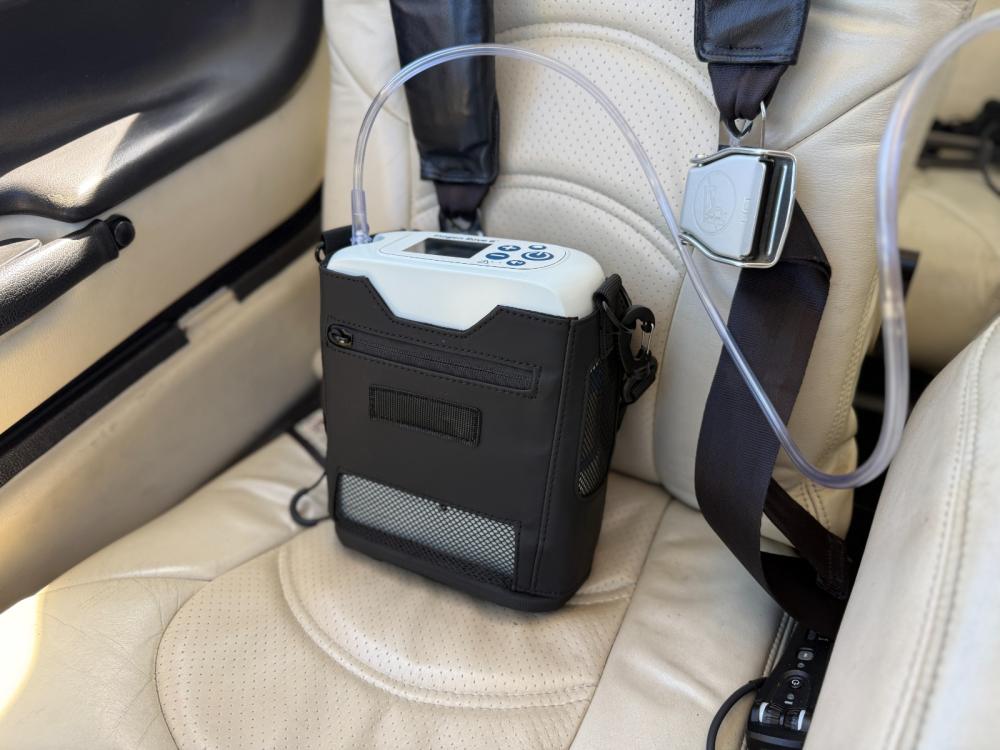
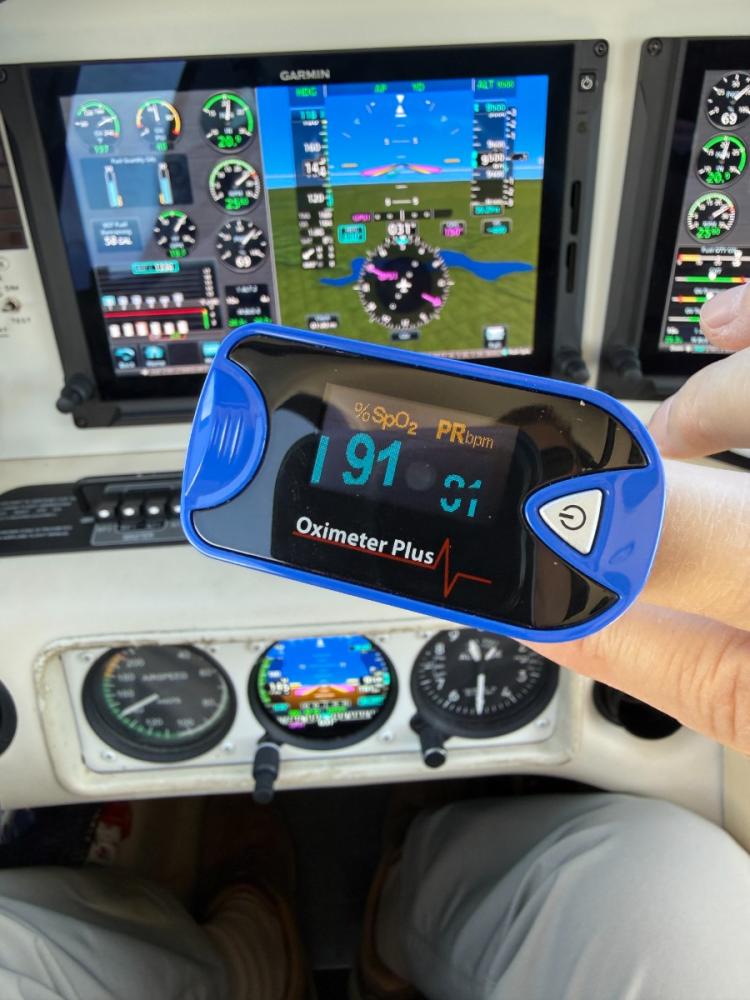
So much for the theory. To test it in the real world, I took a Cirrus SR22 up to 9,500 feet with the Inogen Rove 6 on the co-pilot’s seat. After leveling off I pulled out my pulse oximeter (a must-have for any pilot flying above 5,000 feet) to check my blood oxygen saturation before using any oxygen. Somewhat surprisingly, after less than five minutes, my SPO2 was already at 91%. That’s not dangerous, but it is below the level where most doctors suggest using oxygen.
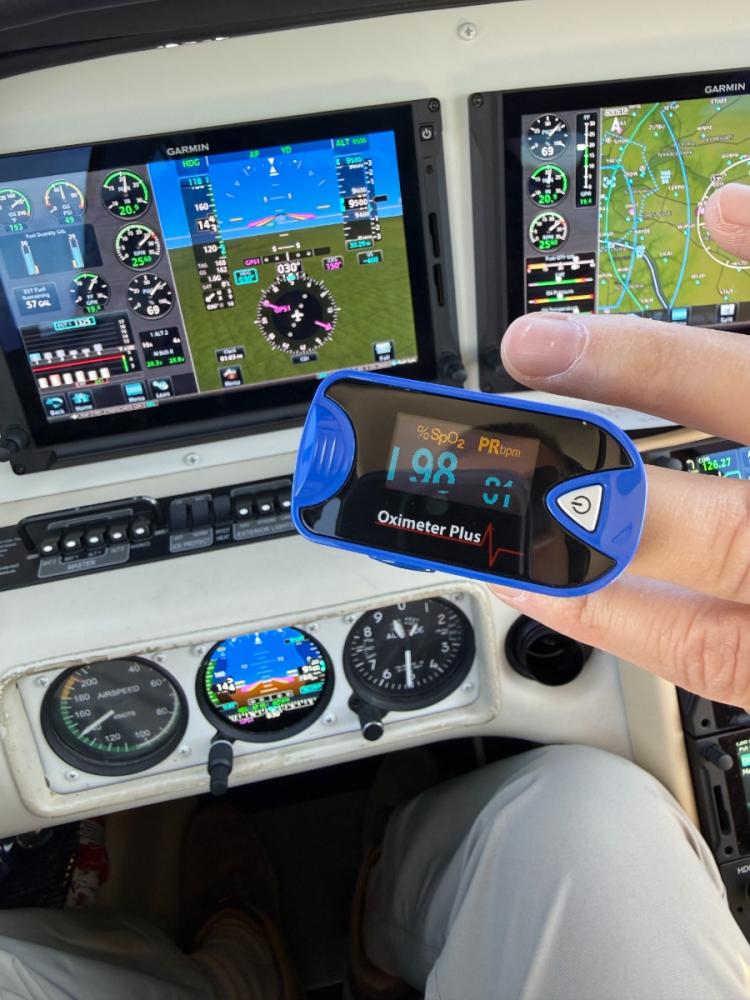
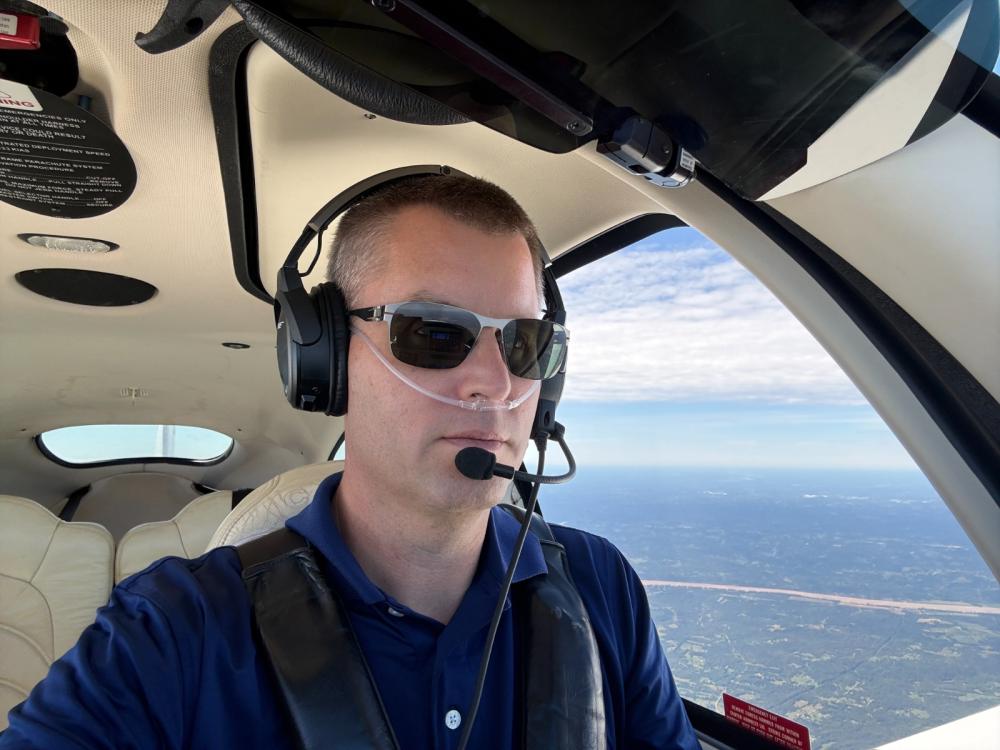
I put the cannula around my ears and into my nose, pushed the power button on the Inogen Rove 6, and took normal breaths. In less than two minutes, the pulse oximeter showed 98%. Considering I hadn’t even read the instruction manual yet, I consider that a successful test.
The unit itself is surprisingly small and easy to store on the floor behind the pilot seat or on the passenger seat, and I found the carry bag to be a nice accessory. You can even fit the entire system in most duffel-style flight bags. The screen was readable in sunlight, and showed battery life and estimated time remaining. You can adjust the oxygen output to one of six levels, depending on your needs and altitude. From the pilot’s standpoint, the only operational difference between this setup and an oxygen tank is that the oxygen concentrator provides pulse dose delivery instead of constant flow, so you’ll notice little bursts of air as you breathe.
There are two limitations to know about. First, the system only works for 1-2 users and only works with a cannula (no mask). The manufacturer says the Rove 6 will work for one person up to 18,000 feet or two people up to 15-17,500 feet. That makes this a good option for pilots who often fly alone or with a single passenger, but it’s not a replacement for a four-place oxygen tank. Using a pulse oximeter to monitor your SPO2 is important as you get close to 18,000 feet.
The Math: Is It Worth the Upgrade?
There’s no getting around it—at an initial glance, the Inogen Rove 6 carries a higher price tag than a standard portable bottle. It costs roughly $1,600 more than the entry-level 2-place SkyOx tank system sold here at Sporty’s.
So, does the math make sense?
If you frequently fly solo or cross-country with a single passenger, the savings catch up faster than you might think:
- Size and Weight: The Inogen Rove 6 weighs about 20% less than a standard 2-place portable bottle system, so there’s no weight penalty.
- Battery Life: You get roughly six hours of battery life on a charge (using the standard battery setup on typical settings)—which aligns right with the standard endurance you’d get out of a cannula on a small SkyOx bottle. That’s enough for two fairly long flights in most light airplanes.
- The Refill Headache: Recharging the Inogen costs practically zero dollars; you simply plug it into a wall outlet at the hotel or FBO, or use the cigarette lighter in the plane. Refill services for a traditional high-pressure bottle, on the other hand, run about $100 at most FBOs (and good luck finding a line tech certified to fill aviator oxygen at 7:00 PM on a Friday night).
If you fly 100 hours a year and use oxygen on 50 of those hours, a traditional cylinder requires about 10 refills a year. 10 refills X $100 per refill = $1,000 per year in oxygen costs. At that usage rate, the Inogen Rove 6 pays for the price difference in roughly 18 months. Even if you take a conservative view with cheaper regional refills, you break even comfortably within two years. Past that mark, every hour you fly on oxygen is effectively free. More importantly, you’ll find yourself using oxygen much more frequently.
The Verdict
If you fly a high-performance cross-country aircraft like a Bonanza, 182, or SR22 (especially a non-turbo model that stays below 18,000 feet), the Inogen Rove 6 eliminates almost every headache associated with high-altitude flying. It avoids FBO refill delays, saves cabin weight, and makes using oxygen so effortless that you’ll actually use it when you should.
Shop the Inogen Rove 6 Pilot Oxygen Concentrator at Sporty's