Question:
I learned the “5 Ts” (Time, Turn, Twist, Throttle, Talk) during instrument training. With today’s GPS-equipped aircraft, is there a better way to stay organized when crossing fixes?
Answer:
The 5 Ts still work, but they were designed for an era when IFR navigation required more manual setup, timing, and cross-checking. In today’s cockpit, especially with moving maps and integrated avionics, pilots benefit from a broader situational scan rather than a fixed sequence of tasks.
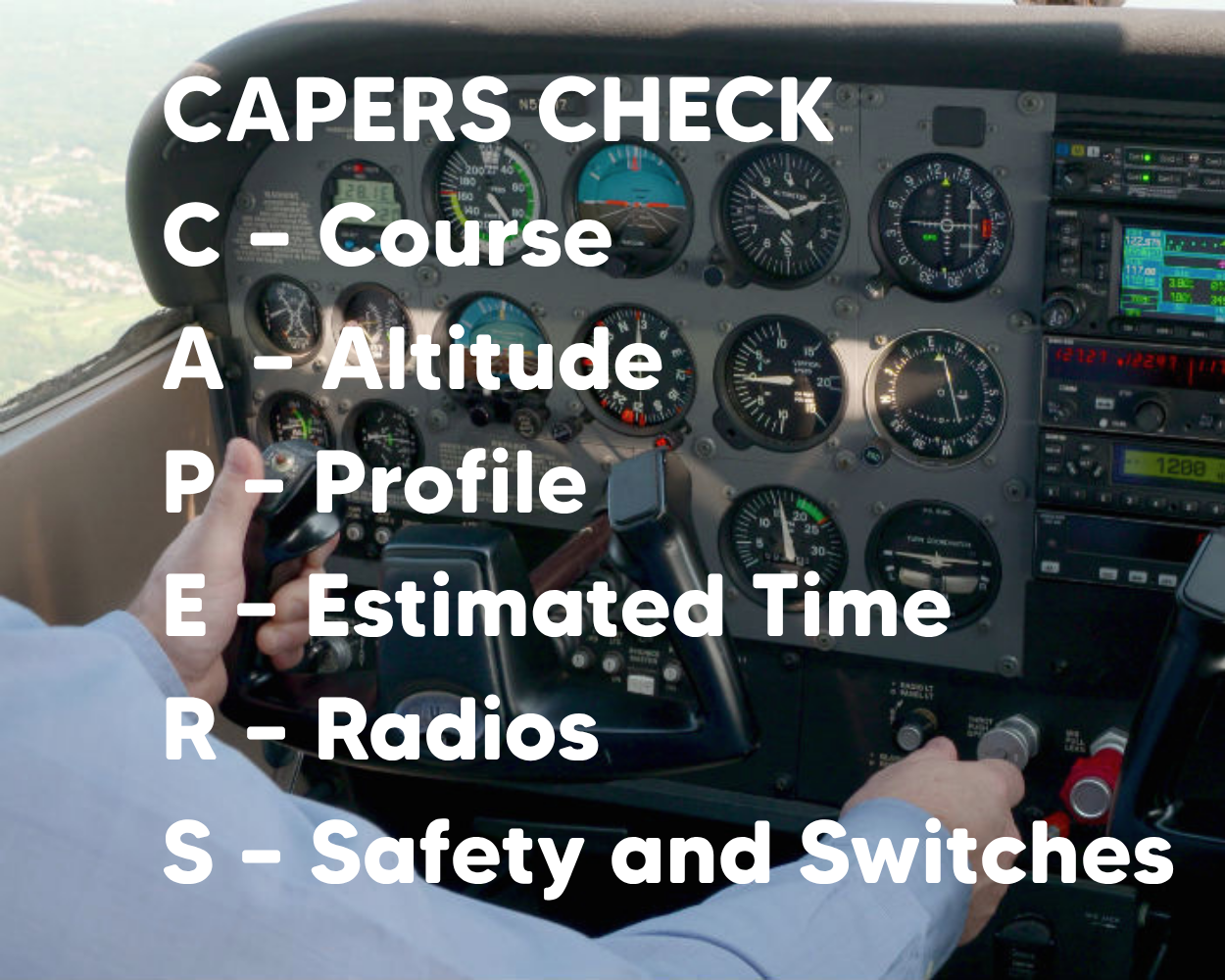 One useful modern alternative is the CAPERS check:
C — Course: Confirm the active route and expected path.
A — Altitude: Verify current clearance and any upcoming restrictions.
P — Profile: Assess energy state—are you high, low, fast, or slow for the next phase?
E — Estimated Time: Monitor timing to the next fix and overall progress.
R — Radios: Confirm correct frequencies and navigation sources.
S — Safety and Switches: Check fuel, lights, systems, and any required configuration changes.
Think of it this way: the 5 Ts are a task list while CAPERS is a situational awareness scan.
Both have value, but CAPERS better matches the way modern IFR flying actually works.
Learn more and sign up for our free IFR newsletter at IFRFocus.com.